 국립중앙도서관 "우편 복사 서비스"로 연결 됩니다.



1. The aim of thesis was to give an explanation of Korean palatalization. On that account, this thesis included the following contents besides true palatalization : (1) Relexicalization in coronal obstruent sounds of nouns (2) The phenomena of unpal...
다국어 입력
あ
ぁ
か
が
さ
ざ
た
だ
な
は
ば
ぱ
ま
や
ゃ
ら
わ
ゎ
ん
い
ぃ
き
ぎ
し
じ
ち
ぢ
に
ひ
び
ぴ
み
り
う
ぅ
く
ぐ
す
ず
つ
づ
っ
ぬ
ふ
ぶ
ぷ
む
ゆ
ゅ
る
え
ぇ
け
げ
せ
ぜ
て
で
ね
へ
べ
ぺ
め
れ
お
ぉ
こ
ご
そ
ぞ
と
ど
の
ほ
ぼ
ぽ
も
よ
ょ
ろ
を
ア
ァ
カ
サ
ザ
タ
ダ
ナ
ハ
バ
パ
マ
ヤ
ャ
ラ
ワ
ヮ
ン
イ
ィ
キ
ギ
シ
ジ
チ
ヂ
ニ
ヒ
ビ
ピ
ミ
リ
ウ
ゥ
ク
グ
ス
ズ
ツ
ヅ
ッ
ヌ
フ
ブ
プ
ム
ユ
ュ
ル
エ
ェ
ケ
ゲ
セ
ゼ
テ
デ
ヘ
ベ
ペ
メ
レ
オ
ォ
コ
ゴ
ソ
ゾ
ト
ド
ノ
ホ
ボ
ポ
モ
ヨ
ョ
ロ
ヲ
―
http://chineseinput.net/에서 pinyin(병음)방식으로 중국어를 변환할 수 있습니다.
변환된 중국어를 복사하여 사용하시면 됩니다.
예시)
- 中文 을 입력하시려면 zhongwen을 입력하시고 space를누르시면됩니다.
- 北京 을 입력하시려면 beijing을 입력하시고 space를 누르시면 됩니다.
А
Б
В
Г
Д
Е
Ё
Ж
З
И
Й
К
Л
М
Н
О
П
Р
С
Т
У
Ф
Х
Ц
Ч
Ш
Щ
Ъ
Ы
Ь
Э
Ю
Я
а
б
в
г
д
е
ё
ж
з
и
й
к
л
м
н
о
п
р
с
т
у
ф
х
ц
ч
ш
щ
ъ
ы
ь
э
ю
я
′
″
℃
Å
¢
£
¥
¤
℉
‰
$
%
F
₩
㎕
㎖
㎗
ℓ
㎘
㏄
㎣
㎤
㎥
㎦
㎙
㎚
㎛
㎜
㎝
㎞
㎟
㎠
㎡
㎢
㏊
㎍
㎎
㎏
㏏
㎈
㎉
㏈
㎧
㎨
㎰
㎱
㎲
㎳
㎴
㎵
㎶
㎷
㎸
㎹
㎀
㎁
㎂
㎃
㎄
㎺
㎻
㎽
㎾
㎿
㎐
㎑
㎒
㎓
㎔
Ω
㏀
㏁
㎊
㎋
㎌
㏖
㏅
㎭
㎮
㎯
㏛
㎩
㎪
㎫
㎬
㏝
㏐
㏓
㏃
㏉
㏜
㏆
https://www.riss.kr/link?id=T2180263
- 저자
-
발행사항
대전: 충남대학교, 1990
-
학위논문사항
학위논문(석사) -- 충남대학교 대학원 , 국어국문학과 국어학전공 , 1990
-
발행연도
1990
-
작성언어
한국어
- 주제어
-
KDC
715
-
DDC
495.75 판사항(19)
-
발행국(도시)
충청남도
-
형태사항
64p.; 26cm
-
소장기관
- 강원대학교 도서관

- 서원대학교 도서관
- 전남대학교 중앙도서관
- 충남대학교 도서관
- 한국교원대학교 도서관
- 한남대학교 도서관
- 호남대학교 도서관
- 강원대학교 도서관
-
0
상세조회 -
0
다운로드
인용문이 복사되었습니다.
부가정보
다국어 초록 (Multilingual Abstract)

1. The aim of thesis was to give an explanation of Korean palatalization. On that account, this thesis included the following contents besides true palatalization :
(1) Relexicalization in coronal obstruent sounds of nouns
(2) The phenomena of unpalatalization in palatalizing environment, appearing in Phyong-an dialect and the other dialects
(3) [i] > [i] (_ > l) after [∫](ㅅ), [t∫](ス), and [t∫^h](ㅊ) in the 19-th century
And it could be validated that the following principles had operated in palatalization from the 19-th downward.
(4)Consonants have potentially [土 back] or [土 round] belonging to vocalic features. And vowels have potentially the strength of articulatory position (I˚- V˚) belonging to consonantal features.
(5) When two incompatible features are specified in a brace, the stronger one is alive, and the other is deleted.
The analysis in the feature of degree made use of the phonetic list in Gim(1998 フ : 181).
2. The letter ㅅ, ス and ㅊ were alveolar sounds [s], [ts] and [ts^h] respectively in the 15-th. But they showed already phonetic confusion as [s] ∼ [∫], [ts] ∼ [t∫] and [ts^h] ∼ [t∫^h] in 15 and 16-th. ス [ts] and ㅊ [ts^h] were accomplished phonetic variation into [t∫] and [t∫^h] in the 18-th. But ㅅ [s] was not accomplished phonetic variation into [∫]. Because the palatalization of ㅎ [h] sound was delayed, and not productive in central dialect.
3. Owing to the palatal aliophone of ス [ts] and ㅊ [ts^h], the palatalization of ㄷ [t] (ㅌ [t^h]) sound could be occurred already in the 15-th. The palatalization of ㄷ [t] (ㅌ [t^h]) sound was spread out and generalized in most of dialects in the 17 and 18-th. It would be conformed by the relexicalization in coronal obstruent sounds of nouns. ㄷ [t] neutralized at word-final position of nouns in the 16-th was changed into ㅅ [s] or ス [t∫] in the 18-th. The latter case, that was the ス [t∫] form, was the re-analyzed representation by the productive palatalization rule.
The Productive palatalization rule was also applicated at word-initial position. ㄴ/n/ deletion at word initial position was occurred by the productive palatalization rule. ㄴ/n/ was assimilated to the aperture of glide-y which it followed after the next.
There was the phenomena of unpalatalization in spite of the palatalizing environment, in Phyong-an dialect and the other dialects. The palatalizing environment was unnecessary in Phyong-an dialect. But the other dialect differed from the reason of unpalatalization in Phyong-an dialect. That is, the reason why unpalatalized in the other dialects, it had been the constraint of environment in palatalization.
4. The palatalization of フ [k] and ㅎ [h] was generalized only in some dialects except central dialect in the 18-th. But They was regressed into フ [k] and ㅎ [h].
5. '- [i] > l [i]' after ㅅ [∫], ス[t∫], ㅊ [t∫^h] was the last phenomena related with palatalization. It was affected by the potential features of palatal. And it showed validity of the hypothesis 1. (4)(5).
*This thesis submitted to the committee of the Graduate School of Chung-nam National Univesity in partial fulfilment of the requirements for the degree of Master of Arts in February, 1990.
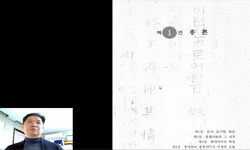
목차 (Table of Contents)
- 목차
- 1. 서론
- 1.1 연구 목적과 범위 = 1
- 1.2 기존 연구와 문제 제시 = 2
- 1.3 연구 방법 = 3
- 목차
- 1. 서론
- 1.1 연구 목적과 범위 = 1
- 1.2 기존 연구와 문제 제시 = 2
- 1.3 연구 방법 = 3
- 2. 처음 구개음화
- 2.1 ス[ts]의 음성적 변이 = 6
- 2.2 ㅅ[s]의 음성적 혼란 = 9
- 3. 설음 구개음화
- 3.1 ㄷ(ㅌ) 구개음화의 발단 =13
- 3.2 ㄷ(ㅌ) 구개음화의 확산 = 14
- 3.2.1 15·16세기의 중화 규칙 = 15
- 3.2.2 17·8세기의 재어휘화 = 18
- 3.3 어두 "ㄴ"의 탈락 = 22
- 3.4 구개적 환경에서 구개음화되지 않는 현상
- 3.4.1 구개음화 지역에서 구개음화되지 않는 현상 = 27
- 3.4.2 평안도 방언이 구개음화되지 않은 원인 = 37
- 4. フ(ㅋ)과 ㅎ의 구개음화 = 40
- 5. ㅅ, ㅈ, ㅊ 뒤의 '의 > 이' 현상
- 5.1 구개음화와의 관계 = 47
- 5.2 경구개음의 잠재적 자질의 작용 = 48
- 6. 결론 = 54
- * 참고자료 및 약호
- * 참고 문헌
- * 영문 요약
분석정보



이 자료와 함께 이용한 RISS 자료
나만을 위한 추천자료
로그인하고 관련된 다양한 학술자료를 확인해 보세요.
로그인

