 국립중앙도서관 "우편 복사 서비스"로 연결 됩니다.


 KCI
KCI 스콜라
스콜라본 연구의 목적은 창의적 문제해결력 증진을 위해 창의적 문제해결력의 주요 구성요인들을 확인하여 그 특성을 파악하고 창의적 문제해결력 증진을 위한 설계원리들을 모색하는 ...
다국어 입력
あ
ぁ
か
が
さ
ざ
た
だ
な
は
ば
ぱ
ま
や
ゃ
ら
わ
ゎ
ん
い
ぃ
き
ぎ
し
じ
ち
ぢ
に
ひ
び
ぴ
み
り
う
ぅ
く
ぐ
す
ず
つ
づ
っ
ぬ
ふ
ぶ
ぷ
む
ゆ
ゅ
る
え
ぇ
け
げ
せ
ぜ
て
で
ね
へ
べ
ぺ
め
れ
お
ぉ
こ
ご
そ
ぞ
と
ど
の
ほ
ぼ
ぽ
も
よ
ょ
ろ
を
ア
ァ
カ
サ
ザ
タ
ダ
ナ
ハ
バ
パ
マ
ヤ
ャ
ラ
ワ
ヮ
ン
イ
ィ
キ
ギ
シ
ジ
チ
ヂ
ニ
ヒ
ビ
ピ
ミ
リ
ウ
ゥ
ク
グ
ス
ズ
ツ
ヅ
ッ
ヌ
フ
ブ
プ
ム
ユ
ュ
ル
エ
ェ
ケ
ゲ
セ
ゼ
テ
デ
ヘ
ベ
ペ
メ
レ
オ
ォ
コ
ゴ
ソ
ゾ
ト
ド
ノ
ホ
ボ
ポ
モ
ヨ
ョ
ロ
ヲ
―
http://chineseinput.net/에서 pinyin(병음)방식으로 중국어를 변환할 수 있습니다.
변환된 중국어를 복사하여 사용하시면 됩니다.
예시)
- 中文 을 입력하시려면 zhongwen을 입력하시고 space를누르시면됩니다.
- 北京 을 입력하시려면 beijing을 입력하시고 space를 누르시면 됩니다.
А
Б
В
Г
Д
Е
Ё
Ж
З
И
Й
К
Л
М
Н
О
П
Р
С
Т
У
Ф
Х
Ц
Ч
Ш
Щ
Ъ
Ы
Ь
Э
Ю
Я
а
б
в
г
д
е
ё
ж
з
и
й
к
л
м
н
о
п
р
с
т
у
ф
х
ц
ч
ш
щ
ъ
ы
ь
э
ю
я
′
″
℃
Å
¢
£
¥
¤
℉
‰
$
%
F
₩
㎕
㎖
㎗
ℓ
㎘
㏄
㎣
㎤
㎥
㎦
㎙
㎚
㎛
㎜
㎝
㎞
㎟
㎠
㎡
㎢
㏊
㎍
㎎
㎏
㏏
㎈
㎉
㏈
㎧
㎨
㎰
㎱
㎲
㎳
㎴
㎵
㎶
㎷
㎸
㎹
㎀
㎁
㎂
㎃
㎄
㎺
㎻
㎽
㎾
㎿
㎐
㎑
㎒
㎓
㎔
Ω
㏀
㏁
㎊
㎋
㎌
㏖
㏅
㎭
㎮
㎯
㏛
㎩
㎪
㎫
㎬
㏝
㏐
㏓
㏃
㏉
㏜
㏆

RISS 인기검색어

창의적 문제해결력의 구성요인과 교수설계원리의 탐색 = Instructional Design Principles for Enhancing Creative Problem Solving Skills
한글로보기https://www.riss.kr/link?id=A76486323
- 저자
- 발행기관
- 학술지명
- 권호사항
-
발행연도
2007
-
작성언어
-
- 주제어
-
KDC
370
-
등재정보
KCI등재
-
자료형태
학술저널
- 발행기관 URL
-
수록면
55-73(19쪽)
-
KCI 피인용횟수
31
- 제공처
-
0
상세조회 -
0
다운로드
부가정보
국문 초록 (Abstract)

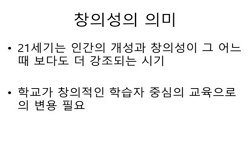
본 연구의 목적은 창의적 문제해결력 증진을 위해 창의적 문제해결력의 주요 구성요인들을 확인하여 그 특성을 파악하고 창의적 문제해결력 증진을 위한 설계원리들을 모색하는 데에 있다. 이를 위해 본 연구에서는 먼저 창의적 문제해결에 관한 선행연구들을 검토함으로써 창의적 문제해결력의 주요 요인들을 중심으로 이론적 모형을 제시하고, 이를 바탕으로 창의적 문제해결을 위한 교수설계의 원리를 제시하고자 하였다. 구체적으로 이러한 목적을 달성하기 위해 첫째, 창의성과 창의적 문제해결력의 의미를 살펴본 후 창의적 문제해결력에 관한 모형을 제시하였다. 창의적 문제해결력에 관한 모형은 창의적 문제해결력을 구성하는 요인들과 이들 요인들간의 관계를 나타나는 이론적 틀의 형태로 제시되었다. 둘째, 창의적 문제해결력을 이루는 주요 구성요인들의 특성을 조사하였다. 주요 구성요인으로 학습자특성, 교수전략, 창의적 문제해결과정, 학습자 특성, 상황적 특성의 다섯 가지 요인들이 포함되었다. 셋째, 창의적 문제해결에 관한 주요 연구변인들을 중심으로 창의적 문제해결력 증진을 위한 교수설계원리를 제시함으로써 실천적인 측면에서 창의적 문제해결연구의 방향을 제시하였다. 구체적으로 학습자특성차원에서는 문제해결에 대한 긍정적인 태도함양 및 문제해결과정에 대한 이해와 통제를 신장시키고, 문제해결과정차원에서는 합리적인 문제해결절차의 습득이 요구되고, 문제특성차원에서는 실생활의 맥락화된 비구조화된 과제를 제시해야 하며, 교수전략차원에서는 영역특수적 교수전략의 제시가 요구되고, 문제해결상황차원에서는 학습자 주도적인 학습을 지원하는 문제상황을 제공할 것이 요구된다.
본 연구의 목적은 창의적 문제해결력 증진을 위해 창의적 문제해결력의 주요 구성요인들을 확인하여 그 특성을 파악하고 창의적 문제해결력 증진을 위한 설계원리들을 모색하는 데에 있다. 이를 위해 본 연구에서는 먼저 창의적 문제해결에 관한 선행연구들을 검토함으로써 창의적 문제해결력의 주요 요인들을 중심으로 이론적 모형을 제시하고, 이를 바탕으로 창의적 문제해결을 위한 교수설계의 원리를 제시하고자 하였다. 구체적으로 이러한 목적을 달성하기 위해 첫째, 창의성과 창의적 문제해결력의 의미를 살펴본 후 창의적 문제해결력에 관한 모형을 제시하였다. 창의적 문제해결력에 관한 모형은 창의적 문제해결력을 구성하는 요인들과 이들 요인들간의 관계를 나타나는 이론적 틀의 형태로 제시되었다. 둘째, 창의적 문제해결력을 이루는 주요 구성요인들의 특성을 조사하였다. 주요 구성요인으로 학습자특성, 교수전략, 창의적 문제해결과정, 학습자 특성, 상황적 특성의 다섯 가지 요인들이 포함되었다. 셋째, 창의적 문제해결에 관한 주요 연구변인들을 중심으로 창의적 문제해결력 증진을 위한 교수설계원리를 제시함으로써 실천적인 측면에서 창의적 문제해결연구의 방향을 제시하였다. 구체적으로 학습자특성차원에서는 문제해결에 대한 긍정적인 태도함양 및 문제해결과정에 대한 이해와 통제를 신장시키고, 문제해결과정차원에서는 합리적인 문제해결절차의 습득이 요구되고, 문제특성차원에서는 실생활의 맥락화된 비구조화된 과제를 제시해야 하며, 교수전략차원에서는 영역특수적 교수전략의 제시가 요구되고, 문제해결상황차원에서는 학습자 주도적인 학습을 지원하는 문제상황을 제공할 것이 요구된다.
다국어 초록 (Multilingual Abstract)
The purpose of this study is to identify the main components of creative problem solving and suggest design principles to enhance creative problem solving. To achieve this purpose, a model on creative problem solving was built based on literature reviews on creativity, creative problem solving, and problem solving. The main findings from this study included the followings. First, the meanings of the creative problem solving were defined. Second, characteristics of the main components consisting creative problem solving were examined. Third, design principles were suggested to increase the identified components of the creative problem solving.
The purpose of this study is to identify the main components of creative problem solving and suggest design principles to enhance creative problem solving. To achieve this purpose, a model on creative problem solving was built based on lit...
The purpose of this study is to identify the main components of creative problem solving and suggest design principles to enhance creative problem solving. To achieve this purpose, a model on creative problem solving was built based on literature reviews on creativity, creative problem solving, and problem solving. The main findings from this study included the followings. First, the meanings of the creative problem solving were defined. Second, characteristics of the main components consisting creative problem solving were examined. Third, design principles were suggested to increase the identified components of the creative problem solving.
목차 (Table of Contents)
- 요약
Ⅰ. 서론
Ⅱ. 창의적 문제해결력의 개념과 모형
Ⅲ. 창의적 문제해결력 구성요인들의 주요 특성
Ⅳ. 창의적 문제해결력 증진을 위한 교수설계원리
Ⅴ. 결론
참고문헌
Abstract
- 요약
Ⅰ. 서론
Ⅱ. 창의적 문제해결력의 개념과 모형
Ⅲ. 창의적 문제해결력 구성요인들의 주요 특성
Ⅳ. 창의적 문제해결력 증진을 위한 교수설계원리
Ⅴ. 결론
참고문헌
Abstract
참고문헌 (Reference)
1 "창의적 문제해결력 신장을 위한 초등과학교육과정 개발 및 적용" 20 (20): 307-328, 2000
2 "창의적 문제해결능력 신정을 위한 교육과정개발의 기초" 15 (15): 129-153, 1997
3 "무엇이 어떻게 발달하는가. 계명행동과학" 45-60, 1989
4 "교수학습방법의 이론과 실제" 교육과학사 1997
5 "과학창의성 계발을 위한 프로그램 개발- 이론과 예시를 중심으로" 23 (23): 334-338, 2002
6 "과학영재아동과 일반아동의 창의적 과학문제 해결과정에 대한 사례연구" 25 (25): 532-547, 2007
7 "개방형 문제해결과정에서 수학영재아와 수학우수아의 행동특성 분석" 20 (20): 33-59, 2006
8 "The teaching and assessing of mathematical problem solving. Reston National Council of Teachers of Mathematics." 1988
9 "The role of context in learning and instructional design" 45 (45): 8-115, 1997
10 "The pbl approach as an enhancement factor of personal meaningfulness of learning" 29 : 93-101, 1995
1 "창의적 문제해결력 신장을 위한 초등과학교육과정 개발 및 적용" 20 (20): 307-328, 2000
2 "창의적 문제해결능력 신정을 위한 교육과정개발의 기초" 15 (15): 129-153, 1997
3 "무엇이 어떻게 발달하는가. 계명행동과학" 45-60, 1989
4 "교수학습방법의 이론과 실제" 교육과학사 1997
5 "과학창의성 계발을 위한 프로그램 개발- 이론과 예시를 중심으로" 23 (23): 334-338, 2002
6 "과학영재아동과 일반아동의 창의적 과학문제 해결과정에 대한 사례연구" 25 (25): 532-547, 2007
7 "개방형 문제해결과정에서 수학영재아와 수학우수아의 행동특성 분석" 20 (20): 33-59, 2006
8 "The teaching and assessing of mathematical problem solving. Reston National Council of Teachers of Mathematics." 1988
9 "The role of context in learning and instructional design" 45 (45): 8-115, 1997
10 "The pbl approach as an enhancement factor of personal meaningfulness of learning" 29 : 93-101, 1995
11 "The Art of Thought. New York" 1926
12 "Problem solving and creativity" 345-384, 1997
13 "Problem solving" Academic Press, CA 295-300, 1999
14 "Principles and procedures of creative thinking" 1963
15 "Learning strategies and problem solving" 329-363, 1995
16 "Instructional design models for well-structured and ill-structured problem learning outcomes" 45 (45): 65-94, 1997
17 "Guidelines for effective facilitation of creative problem solving" 35-49, 1989
18 "Computers as mindtools for schools" New Jersey:Merrill Prentice Hall 2000
19 "A review of the literature." 1993
20 ". The role of strategies and knowledge in problem solving" 1993
21 ". The elusive search for the teachable aspects of problem solving. In J. A. Glover &R. R. Ronning Historical foundations of educational psychology" Plenum Press. 327347-, 1987
22 ". The cognitive psychology school learning. Boston" 1985
23 ". The IDEAL problem solver. NewYork" 1984
24 ". Embedding metacognitive cues into hypermedia systems to promote far transfer problem solving. Proceeding of selected research and development presentations at the 1994 national convention of the association for educational communications and technology sponsored by the research and theory division. ED 373735" 1994
25 ". Creativity" 5 : 444-454, 1967
26 ". Cognitive psychology and its implication. San Francisco" 1980
27 ". Cognitive flexibility and inflexibility in principal's problem solving. Paper presented at the Annual meeting of the American Educational Research Association" 1988
동일학술지(권/호) 다른 논문
-
- 한국열린교육학회
- Yoo Jin Eun(유진은)
- 2007
- KCI등재
-
- 한국열린교육학회
- 김재웅(Jae-Woong Kim)
- 2007
- KCI등재
-
- 한국열린교육학회
- 김성열(SeongYul Kim)
- 2007
- KCI등재
-
- 한국열린교육학회
- 이병환(Lee Byung-Hwan)
- 2007
- KCI등재
분석정보
인용정보 인용지수 설명보기
학술지 이력
| 연월일 | 이력구분 | 이력상세 | 등재구분 |
|---|---|---|---|
| 2026 | 평가예정 | 재인증평가 신청대상 (재인증) | |
| 2020-01-01 | 평가 | 등재학술지 유지 (재인증) | |
| 2017-01-01 | 평가 | 등재학술지 유지 (계속평가) | |
| 2015-03-18 | 학회명변경 | 영문명 : 미등록 -> The Journal of Yeolin Education | |
| 2013-01-01 | 평가 | 등재학술지 유지 (등재유지) | |
| 2010-01-01 | 평가 | 등재학술지 유지 (등재유지) | |
| 2008-01-01 | 평가 | 등재학술지 유지 (등재유지) | |
| 2005-01-01 | 평가 | 등재학술지 선정 (등재후보2차) | |
| 2004-01-01 | 평가 | 등재후보 1차 PASS (등재후보1차) |  |
| 2003-01-01 | 평가 | 등재후보학술지 선정 (신규평가) | |
학술지 인용정보
| 기준연도 | WOS-KCI 통합IF(2년) | KCIF(2년) | KCIF(3년) |
|---|---|---|---|
| 2016 | 1.54 | 1.54 | 1.6 |
| KCIF(4년) | KCIF(5년) | 중심성지수(3년) | 즉시성지수 |
| 1.65 | 1.7 | 1.914 | 0.5 |



이 자료와 함께 이용한 RISS 자료
나만을 위한 추천자료


