 국립중앙도서관 "우편 복사 서비스"로 연결 됩니다.


 KCI
KCI 스콜라
스콜라In recent years, there has been a growing interest in the role of emotions in academic settings; however, the role of emotions in e-learning has been hardly investigated. The purpose of this study was to develop and validate the academic emotions scal...
다국어 입력
あ
ぁ
か
が
さ
ざ
た
だ
な
は
ば
ぱ
ま
や
ゃ
ら
わ
ゎ
ん
い
ぃ
き
ぎ
し
じ
ち
ぢ
に
ひ
び
ぴ
み
り
う
ぅ
く
ぐ
す
ず
つ
づ
っ
ぬ
ふ
ぶ
ぷ
む
ゆ
ゅ
る
え
ぇ
け
げ
せ
ぜ
て
で
ね
へ
べ
ぺ
め
れ
お
ぉ
こ
ご
そ
ぞ
と
ど
の
ほ
ぼ
ぽ
も
よ
ょ
ろ
を
ア
ァ
カ
サ
ザ
タ
ダ
ナ
ハ
バ
パ
マ
ヤ
ャ
ラ
ワ
ヮ
ン
イ
ィ
キ
ギ
シ
ジ
チ
ヂ
ニ
ヒ
ビ
ピ
ミ
リ
ウ
ゥ
ク
グ
ス
ズ
ツ
ヅ
ッ
ヌ
フ
ブ
プ
ム
ユ
ュ
ル
エ
ェ
ケ
ゲ
セ
ゼ
テ
デ
ヘ
ベ
ペ
メ
レ
オ
ォ
コ
ゴ
ソ
ゾ
ト
ド
ノ
ホ
ボ
ポ
モ
ヨ
ョ
ロ
ヲ
―
http://chineseinput.net/에서 pinyin(병음)방식으로 중국어를 변환할 수 있습니다.
변환된 중국어를 복사하여 사용하시면 됩니다.
예시)
- 中文 을 입력하시려면 zhongwen을 입력하시고 space를누르시면됩니다.
- 北京 을 입력하시려면 beijing을 입력하시고 space를 누르시면 됩니다.
А
Б
В
Г
Д
Е
Ё
Ж
З
И
Й
К
Л
М
Н
О
П
Р
С
Т
У
Ф
Х
Ц
Ч
Ш
Щ
Ъ
Ы
Ь
Э
Ю
Я
а
б
в
г
д
е
ё
ж
з
и
й
к
л
м
н
о
п
р
с
т
у
ф
х
ц
ч
ш
щ
ъ
ы
ь
э
ю
я
′
″
℃
Å
¢
£
¥
¤
℉
‰
$
%
F
₩
㎕
㎖
㎗
ℓ
㎘
㏄
㎣
㎤
㎥
㎦
㎙
㎚
㎛
㎜
㎝
㎞
㎟
㎠
㎡
㎢
㏊
㎍
㎎
㎏
㏏
㎈
㎉
㏈
㎧
㎨
㎰
㎱
㎲
㎳
㎴
㎵
㎶
㎷
㎸
㎹
㎀
㎁
㎂
㎃
㎄
㎺
㎻
㎽
㎾
㎿
㎐
㎑
㎒
㎓
㎔
Ω
㏀
㏁
㎊
㎋
㎌
㏖
㏅
㎭
㎮
㎯
㏛
㎩
㎪
㎫
㎬
㏝
㏐
㏓
㏃
㏉
㏜
㏆

RISS 인기검색어
https://www.riss.kr/link?id=A60243613
- 저자
- 발행기관
- 학술지명
- 권호사항
-
발행연도
2012
-
작성언어
-
-
주제어
학업정서 ; 이러닝 ; 측정도구 ; 통제-가치 이론 ; Academic Emotions ; e-learning ; Scale ; Control-Value Theory
-
KDC
370
-
등재정보
KCI등재
-
자료형태
학술저널
- 발행기관 URL
-
수록면
19-44(26쪽)
-
KCI 피인용횟수
10
- 제공처
-
0
상세조회 -
0
다운로드
부가정보
다국어 초록 (Multilingual Abstract)

In recent years, there has been a growing interest in the role of emotions in academic settings; however, the role of emotions in e-learning has been hardly investigated. The purpose of this study was to develop and validate the academic emotions scale which measured the students’ academic emotions during e-learning. For this study, the survey items relevant to e-learning were chosen from AEQ (Achievement Emotions Questionnaire), and then a few items newly constructed were added to the survey items. Students enrolled in two e-learning courses in a university in Korea participated in the study. Among them 992 participants completed the survey, and then the collected data was randomly assigned to three groups. Firstly, both exploratory factor analysis and confirmatory factor analysis were employed with the data from the two groups to find the dimension of the construct of the scale and to test its construct validity. As a result, 22-items were determined for the scale, e-AES(e-learning Academic Emotions Scale), and the six dimensions of e-learning academic emotions were included: enjoyment, confidence, anxiety, frustration, boredom, and learning environment anxiety. Secondly, to confirm its validity and reliability of e-AES a confirmatory factor analysis was employed with the data from the third group. The result indicated that e-AES was reliable and valid. In addition, some limitations and directions for future research were discussed.
In recent years, there has been a growing interest in the role of emotions in academic settings; however, the role of emotions in e-learning has been hardly investigated. The purpose of this study was to develop and validate the academic emotions scale which measured the students’ academic emotions during e-learning. For this study, the survey items relevant to e-learning were chosen from AEQ (Achievement Emotions Questionnaire), and then a few items newly constructed were added to the survey items. Students enrolled in two e-learning courses in a university in Korea participated in the study. Among them 992 participants completed the survey, and then the collected data was randomly assigned to three groups. Firstly, both exploratory factor analysis and confirmatory factor analysis were employed with the data from the two groups to find the dimension of the construct of the scale and to test its construct validity. As a result, 22-items were determined for the scale, e-AES(e-learning Academic Emotions Scale), and the six dimensions of e-learning academic emotions were included: enjoyment, confidence, anxiety, frustration, boredom, and learning environment anxiety. Secondly, to confirm its validity and reliability of e-AES a confirmatory factor analysis was employed with the data from the third group. The result indicated that e-AES was reliable and valid. In addition, some limitations and directions for future research were discussed.
참고문헌 (Reference)
1 강명희, "협력학습을 위한 Cybergogy 모델연구" 이화여자대학교 산학협력단 2005
2 도승이, "한국어판 성취정서 질문지(K-AEQ) 개발 및 타당화" 한국교육심리학회 25 (25): 945-970, 2011
3 한덕웅, "한국어 정서 용어들의 적절성과 경험 빈도" 19 (19): 63-99, 2000
4 김현진, "한국 대학생들의 자기조절동기, 학업정서 및 인지적 자기조절 학습전략 사용 간의 경로 탐색 연구" 한국교육심리학회 25 (25): 693-716, 2011
5 송인섭, "학업정서의 영역성 탐색: 영역일반성, 영역특수성, 영역 복합성의 비교" 학습자중심교과교육학회 11 (11): 227-243, 2011
6 김민성, "학습상황에서 정서의 존재: 학습정서의 원천과 역할" 교육연구소 10 (10): 73-98, 2009
7 박중길, "통제-가치 이론을 이용한 학생의 성취정서 이해: 체육수업에서 동기적 믿음의 역할" 한국스포츠심리학회 22 (22): 153-169, 2011
8 박중길, "체육수업에서 과제가치, 성취목표, 정서 및 과제 지속성과의 인과적 관계: 다중매개모형 검증" 한국스포츠심리학회 21 (21): 71-90, 2010
9 양명희, "정서조절이 학습전략에 미치는 영향: 정서를 매개로 하는 관계 검증" 한국교육심리학회 24 (24): 449-467, 2010
10 도승이, "정서와 교수-학습 연구의 쟁점과 전망" 한국교육심리학회 22 (22): 919-937, 2008
1 강명희, "협력학습을 위한 Cybergogy 모델연구" 이화여자대학교 산학협력단 2005
2 도승이, "한국어판 성취정서 질문지(K-AEQ) 개발 및 타당화" 한국교육심리학회 25 (25): 945-970, 2011
3 한덕웅, "한국어 정서 용어들의 적절성과 경험 빈도" 19 (19): 63-99, 2000
4 김현진, "한국 대학생들의 자기조절동기, 학업정서 및 인지적 자기조절 학습전략 사용 간의 경로 탐색 연구" 한국교육심리학회 25 (25): 693-716, 2011
5 송인섭, "학업정서의 영역성 탐색: 영역일반성, 영역특수성, 영역 복합성의 비교" 학습자중심교과교육학회 11 (11): 227-243, 2011
6 김민성, "학습상황에서 정서의 존재: 학습정서의 원천과 역할" 교육연구소 10 (10): 73-98, 2009
7 박중길, "통제-가치 이론을 이용한 학생의 성취정서 이해: 체육수업에서 동기적 믿음의 역할" 한국스포츠심리학회 22 (22): 153-169, 2011
8 박중길, "체육수업에서 과제가치, 성취목표, 정서 및 과제 지속성과의 인과적 관계: 다중매개모형 검증" 한국스포츠심리학회 21 (21): 71-90, 2010
9 양명희, "정서조절이 학습전략에 미치는 영향: 정서를 매개로 하는 관계 검증" 한국교육심리학회 24 (24): 449-467, 2010
10 도승이, "정서와 교수-학습 연구의 쟁점과 전망" 한국교육심리학회 22 (22): 919-937, 2008
11 김은진, "우리나라 학생들이 경험하는 학업상황의 정서 연구" 한국교육심리학회 25 (25): 501-521, 2011
12 양명희, "성취목표지향성이 학습결과에 미치는 영향: 정서의 조절효과" 한국교육심리학회 23 (23): 51-71, 2009
13 강명희, "기업 이러닝의 만족도와 학업성취도에 대한 감성적실재감과 몰입의 예측관계 규명" 한국평생교육ㆍHRD연구소 7 (7): 125-148, 2011
14 김지심, "기업 이러닝에서 학습자가 인식한 교수실재감과 학습실재감, 학습효과의 구조적 관계 규명" 교육연구소 11 (11): 29-56, 2010
15 김계수, "구조방정식모형 분석" 한나래 출판사 2009
16 이기종, "구조방정식모형 : 인과성, 통계분석 및 추론" 국민대학교 출판부 2005
17 Steiger, J. H., "Understanding the limitations of global fit assessment in structural equation modeling" 42 (42): 893-898, 2007
18 Linnenbrink, E. A., "The role of affect in student learning: A multi-dimensional approach to considering the interaction of affect, motivation, and engagement, In Emotion in education" Elsevier 107-124, 2007
19 Curran, P. J., "The robustness of test statistics to nonnormality and specification error in confirmatory factory analysis" 1 (1): 16-29, 1996
20 Goetz, T., "The domain specificity of academic emotional experiences" 75 (75): 5-29, 2006
21 Pekrun, R., "The control-value theory of achievement emotions: An integrative approach to emotions in education, In Emotion in education" Academic Press 13-36, 2007
22 Pekrun, R., "The control-value theory of achievement emotions : Assumptions, corollaries, and implications for educational research and practice" 18 : 315-341, 2006
23 Artino, A. R., "Practical guidelines for online instructors" 52 (52): 37-45, 2008
24 Garrison, D. R., "Online community of inquiry review : Social, cognitive and teaching presence issue" 11 (11): 61-72, 2007
25 Hair, J. F., "Multivariate data analysis(7th ed.)" Pearson Education, Inc 2009
26 Reinhard Pekrun, "Measuring emotions in students' learning and performance: The Achievement Emotions Questionnaire (AEQ)" ACADEMIC PRESS INC ELSEVIER SCIENCE 36 : 36-48, 2011
27 Tobias, S., "Interest, prior knowledge, and learning" 64 : 37-54, 1994
28 Zull, J. E., "From brain to mind using neuroscience to guide change in education" Stylus Publishing 2011
29 Rovai, A., "Feelings of alienation and community among higher education learners in a virtual classroom" 8 : 97-110, 2005
30 Koat, B., "External representation of learning process and domain knowledge: Affective state as a determinate of its structure and function" 2001
31 Efklides, A., "Emotional experiences during learning : Multiple situated and dynamic" 15 (15): 377-380, 2005
32 O'Regan, K., "Emotion and E-Learning" 7 (7): 78-92, 2003
33 임효창, "E-learning의 정서적 반응 및 학습성과가 전이성과에 미치는 영향: 직무몰입과 성취동기의 조절효과를 중심으로" 대한경영학회 22 (22): 1469-1487, 2009
34 Govaerts, S., "Development and construct validation of an academic emotion scale" 8 : 34-54, 2008
35 Wang, M. J., "Cybergogy for engaged learning: A framework for creating learner engagement through information and communication technology, In Engaged learning with emerging technologies" Springer Publishing 225-253, 2006
36 Hu, L. T., "Cutoff criteria for fit indexes in covariance structure analysis : Conventional criteria versus new alternatives" 6 (6): 1-55, 1999
37 Medina, J., "Brain Rules" Pear Press 2008
38 Reinhard Pekrun, "Boredom in Achievement Settings: Exploring Control-Value Antecedents and Performance Outcomes of a Neglected Emotion" AMER PSYCHOLOGICAL ASSOC 102 (102): 531-549, 201008
39 Zembylas, M., "Adult learners' emotions in online learning" 29 (29): 71-87, 2008
40 Pekrun, R., "Achievement goals and discrete achievement emotions : A theoretical model and prospective test" 98 : 583-597, 2006
41 Reinhard Pekrun, "Achievement Goals and Achievement Emotions: Testing a Model of Their Joint Relations With Academic Performance" AMER PSYCHOLOGICAL ASSOC 101 (101): 115-135, 200902
42 Pekrun, R., "Academic emotions questionnaire(AEQ) : User’s manual" University of Munich, Department of Psychology 2005
43 Pekrun, R., "Academic emotions in students’ self-regulated learning and achievement : A program of quantitative and qualitative research" 37 : 99-105, 2002
44 Elliot, A. J., "A 2X2 achievement goal framework" 80 : 501-519, 2001
동일학술지(권/호) 다른 논문
-
부모의 정서표현 수용태도가 유아의 정서지능 및 놀이성에 미치는 영향
- 한국열린교육학회
- 김희태(Kim Wheetai), 김정림(Kim Junglim)
- 2012
- KCI등재
-
- 한국열린교육학회
- 김민희(Kim Minhee)
- 2012
- KCI등재
-
- 한국열린교육학회
- 허창수(Hur Changsoo)
- 2012
- KCI등재
-
학습유형별 학습성과에 영향을 미치는 학습촉진요인에 관한 연구
- 한국열린교육학회
- 김주은(Kim Jueun)
- 2012
- KCI등재
분석정보
인용정보 인용지수 설명보기
학술지 이력
| 연월일 | 이력구분 | 이력상세 | 등재구분 |
|---|---|---|---|
| 2026 | 평가예정 | 재인증평가 신청대상 (재인증) | |
| 2020-01-01 | 평가 | 등재학술지 유지 (재인증) |  |
| 2017-01-01 | 평가 | 등재학술지 유지 (계속평가) | |
| 2015-03-18 | 학회명변경 | 영문명 : 미등록 -> The Journal of Yeolin Education | |
| 2013-01-01 | 평가 | 등재학술지 유지 (등재유지) | |
| 2010-01-01 | 평가 | 등재학술지 유지 (등재유지) | |
| 2008-01-01 | 평가 | 등재학술지 유지 (등재유지) | |
| 2005-01-01 | 평가 | 등재학술지 선정 (등재후보2차) | |
| 2004-01-01 | 평가 | 등재후보 1차 PASS (등재후보1차) |  |
| 2003-01-01 | 평가 | 등재후보학술지 선정 (신규평가) | |
학술지 인용정보
| 기준연도 | WOS-KCI 통합IF(2년) | KCIF(2년) | KCIF(3년) |
|---|---|---|---|
| 2016 | 1.54 | 1.54 | 1.6 |
| KCIF(4년) | KCIF(5년) | 중심성지수(3년) | 즉시성지수 |
| 1.65 | 1.7 | 1.914 | 0.5 |
연관 공개강의(KOCW)
-

2014 이러닝 국제 콘퍼런스 : Understand Seniors’ Motivation in e-Learning through
한국교육정보진흥협회 Thomas Kuan -

2014 이러닝 국제 콘퍼런스: Analysis of e-Learning Program Management for Adults in Korea
한국교육정보진흥협회 Don-Min, Choi -

2014 이러닝 국제 콘퍼런스 : Developing the PETAL e-Learning Platform~
한국교육정보진흥협회 Vincent Tam -

2014 이러닝 국제 콘퍼런스 : The Moscow State University of Economics~
한국교육정보진흥협회 Vladimir Tikhomirov -
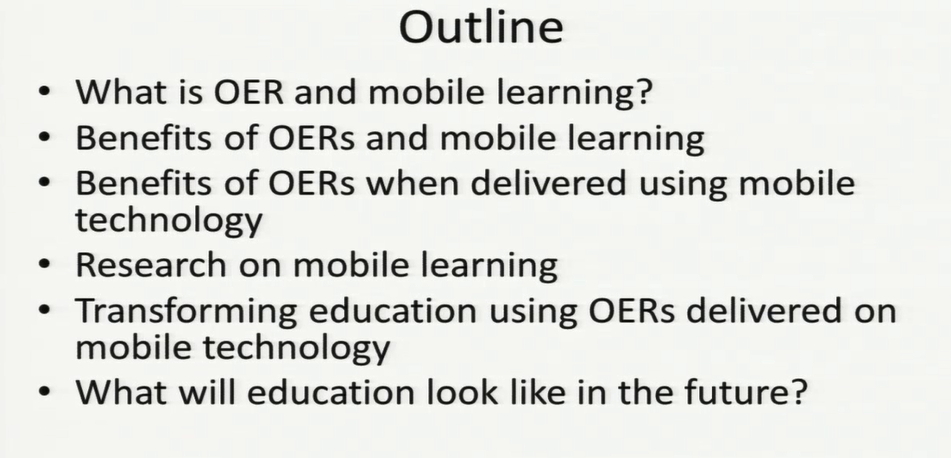
2014 이러닝 국제 콘퍼런스 : Open Education Resources with Mobile Learning to Transform Education
한국교육학술정보원 Mohamed Ally
이 자료와 함께 이용한 RISS 자료
나만을 위한 추천자료


