 국립중앙도서관 "우편 복사 서비스"로 연결 됩니다.


 스콜라
스콜라The purpose of this study is to compare the financial characteristics of 198 unlisted small and medium firms that have revalued their assets over the seven year period from 2008 to 2014. The results of this study are expected to help the users of acco...
다국어 입력
あ
ぁ
か
が
さ
ざ
た
だ
な
は
ば
ぱ
ま
や
ゃ
ら
わ
ゎ
ん
い
ぃ
き
ぎ
し
じ
ち
ぢ
に
ひ
び
ぴ
み
り
う
ぅ
く
ぐ
す
ず
つ
づ
っ
ぬ
ふ
ぶ
ぷ
む
ゆ
ゅ
る
え
ぇ
け
げ
せ
ぜ
て
で
ね
へ
べ
ぺ
め
れ
お
ぉ
こ
ご
そ
ぞ
と
ど
の
ほ
ぼ
ぽ
も
よ
ょ
ろ
を
ア
ァ
カ
サ
ザ
タ
ダ
ナ
ハ
バ
パ
マ
ヤ
ャ
ラ
ワ
ヮ
ン
イ
ィ
キ
ギ
シ
ジ
チ
ヂ
ニ
ヒ
ビ
ピ
ミ
リ
ウ
ゥ
ク
グ
ス
ズ
ツ
ヅ
ッ
ヌ
フ
ブ
プ
ム
ユ
ュ
ル
エ
ェ
ケ
ゲ
セ
ゼ
テ
デ
ヘ
ベ
ペ
メ
レ
オ
ォ
コ
ゴ
ソ
ゾ
ト
ド
ノ
ホ
ボ
ポ
モ
ヨ
ョ
ロ
ヲ
―
http://chineseinput.net/에서 pinyin(병음)방식으로 중국어를 변환할 수 있습니다.
변환된 중국어를 복사하여 사용하시면 됩니다.
예시)
- 中文 을 입력하시려면 zhongwen을 입력하시고 space를누르시면됩니다.
- 北京 을 입력하시려면 beijing을 입력하시고 space를 누르시면 됩니다.
А
Б
В
Г
Д
Е
Ё
Ж
З
И
Й
К
Л
М
Н
О
П
Р
С
Т
У
Ф
Х
Ц
Ч
Ш
Щ
Ъ
Ы
Ь
Э
Ю
Я
а
б
в
г
д
е
ё
ж
з
и
й
к
л
м
н
о
п
р
с
т
у
ф
х
ц
ч
ш
щ
ъ
ы
ь
э
ю
я
′
″
℃
Å
¢
£
¥
¤
℉
‰
$
%
F
₩
㎕
㎖
㎗
ℓ
㎘
㏄
㎣
㎤
㎥
㎦
㎙
㎚
㎛
㎜
㎝
㎞
㎟
㎠
㎡
㎢
㏊
㎍
㎎
㎏
㏏
㎈
㎉
㏈
㎧
㎨
㎰
㎱
㎲
㎳
㎴
㎵
㎶
㎷
㎸
㎹
㎀
㎁
㎂
㎃
㎄
㎺
㎻
㎽
㎾
㎿
㎐
㎑
㎒
㎓
㎔
Ω
㏀
㏁
㎊
㎋
㎌
㏖
㏅
㎭
㎮
㎯
㏛
㎩
㎪
㎫
㎬
㏝
㏐
㏓
㏃
㏉
㏜
㏆
https://www.riss.kr/link?id=A103290285
- 저자
- 발행기관
- 학술지명
- 권호사항
-
발행연도
2017
-
작성언어
-
- 주제어
-
KDC
325
-
등재정보
KCI등재
-
자료형태
학술저널
- 발행기관 URL
-
수록면
151-170(20쪽)
-
KCI 피인용횟수
2
- DOI식별코드
- 제공처
-
0
상세조회 -
0
다운로드
부가정보
다국어 초록 (Multilingual Abstract)

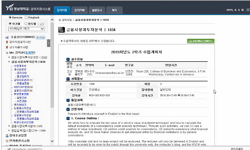
The purpose of this study is to compare the financial characteristics of 198 unlisted small and medium firms that have revalued their assets over the seven year period from 2008 to 2014. The results of this study are expected to help the users of accounting information to understand the intention of the revaluation accounting of companies that selected the tangible asset revaluation model. The financial data of unlisted small and medium firms in this study were made through manual operation from the Financial Supervisory Service(fss) and can be used to obtain data for the previous year and the following year based on the year in which the revaluation model was selected. It is a firm that can obtain the data of the previous year and the next year based on the year in which the revaluation model was selected. Among the unlisted small and medium firms, the asset revaluation sample is similar to the asset size and the business. The empirical results of this study are summarized as follows. First, low cash ratio is the motive factor for small to medium firms to select asset revaluation. And the cash ratio is low, it can be a motive factor for raising the cash ratio by revaluing the assets. Third, high borrowing-to-equity ratio was identified as a motive factor for asset
revaluation. This shows that asset revaluation can act as a motive factor for increasing total assets and reporting higher total assets. Third, high borrowing-to-equity ratio was identified as a motive factor for asset revaluation. High borrowing means borrowing more than equity capital. When the revaluation is increased by revaluing the asset, it is accumulated for as other comprehensive income, which is a capital item. This is because even if the borrowing is intact, the amount of equity capital will increase and the debt-to-equity ratio will eventually be lowered. Fourth, firms with higher total assets are identified as motivators for asset revaluation. The results show that firms with high total assets can be motivated to revaluate assets because the benefits from asset revaluation are larger than costs.
revaluation. This shows that asset revaluation can act as a motive factor for increasing total assets and reporting higher total assets. Third, high borrowing-to-equity ratio was identified as a motive factor for asset revaluation. High borrowing means borrowing more than equity capital. When the revaluation is increased by revaluing the asset, it is accumulated for as other comprehensive income, which is a capital item. This is because even if the borrowing is intact, the amount of equity capital will increase and the debt-to-equity ratio will eventually be lowered. Fourth, firms with higher total assets are identified as motivators for asset revaluation. The results show that firms with high total assets can be motivated to revaluate assets because the benefits from asset revaluation are larger than costs.
The purpose of this study is to compare the financial characteristics of 198 unlisted small and medium firms that have revalued their assets over the seven year period from 2008 to 2014. The results of this study are expected to help the users of accounting information to understand the intention of the revaluation accounting of companies that selected the tangible asset revaluation model. The financial data of unlisted small and medium firms in this study were made through manual operation from the Financial Supervisory Service(fss) and can be used to obtain data for the previous year and the following year based on the year in which the revaluation model was selected. It is a firm that can obtain the data of the previous year and the next year based on the year in which the revaluation model was selected. Among the unlisted small and medium firms, the asset revaluation sample is similar to the asset size and the business. The empirical results of this study are summarized as follows. First, low cash ratio is the motive factor for small to medium firms to select asset revaluation. And the cash ratio is low, it can be a motive factor for raising the cash ratio by revaluing the assets. Third, high borrowing-to-equity ratio was identified as a motive factor for asset
revaluation. This shows that asset revaluation can act as a motive factor for increasing total assets and reporting higher total assets. Third, high borrowing-to-equity ratio was identified as a motive factor for asset revaluation. High borrowing means borrowing more than equity capital. When the revaluation is increased by revaluing the asset, it is accumulated for as other comprehensive income, which is a capital item. This is because even if the borrowing is intact, the amount of equity capital will increase and the debt-to-equity ratio will eventually be lowered. Fourth, firms with higher total assets are identified as motivators for asset revaluation. The results show that firms with high total assets can be motivated to revaluate assets because the benefits from asset revaluation are larger than costs.
참고문헌 (Reference)
1 정운오, "자산재평가의 세금효과와 최적 실시시점" 26 (26): 355-387, 1997
2 박종원, "자산재평가가 기업구조조정에 미치는 영향: 재무구조개선효과를 중심으로" (17) : 41-68, 2001
3 장미혜, "자산 재평가모형 선택동기와 타인자본비용의 가치관련성" 한국경영교육학회 27 (27): 443-471, 2012
4 박태승, "자발적 자산재평가 기업의 부채비율 특성과 재평가잉여금의 정보유용성" 한국상업교육학회 24 (24): 395-418, 2010
5 박길영, "신용평가 제고를 위한 자산재평가 유인에 관한 연구" 한국국제회계학회 (35) : 27-48, 2011
6 李和進, "신규상장기업의 이익조정과 자산재평가의 전략적 선택" 한국회계정보학회 21 : 329-355, 2003
7 백재경, "비상장 중소기업의 신용등급과 이익의 질" 한국세무회계학회 (50) : 145-170, 2016
8 최종서, "비상장 중소기업의 발생액 및 실물활동을 통한 이익조정실태" 한국회계학회 19 (19): 37-76, 2010
9 김정애, "기업회계기준서 제5호 개정에 의한 유형자산 재평가 동기" 113-138, 2010
10 김정애, "기업회계기준 제 5 호 개정에 의한 유형자산 재평가 동기" 13-31, 2010
1 정운오, "자산재평가의 세금효과와 최적 실시시점" 26 (26): 355-387, 1997
2 박종원, "자산재평가가 기업구조조정에 미치는 영향: 재무구조개선효과를 중심으로" (17) : 41-68, 2001
3 장미혜, "자산 재평가모형 선택동기와 타인자본비용의 가치관련성" 한국경영교육학회 27 (27): 443-471, 2012
4 박태승, "자발적 자산재평가 기업의 부채비율 특성과 재평가잉여금의 정보유용성" 한국상업교육학회 24 (24): 395-418, 2010
5 박길영, "신용평가 제고를 위한 자산재평가 유인에 관한 연구" 한국국제회계학회 (35) : 27-48, 2011
6 李和進, "신규상장기업의 이익조정과 자산재평가의 전략적 선택" 한국회계정보학회 21 : 329-355, 2003
7 백재경, "비상장 중소기업의 신용등급과 이익의 질" 한국세무회계학회 (50) : 145-170, 2016
8 최종서, "비상장 중소기업의 발생액 및 실물활동을 통한 이익조정실태" 한국회계학회 19 (19): 37-76, 2010
9 김정애, "기업회계기준서 제5호 개정에 의한 유형자산 재평가 동기" 113-138, 2010
10 김정애, "기업회계기준 제 5 호 개정에 의한 유형자산 재평가 동기" 13-31, 2010
11 기현희, "기업특성에 따른 자산재평가와 기업가치" 한국국제회계학회 (50) : 183-202, 2013
12 신승묘, "기업의 조세관련특성이 자산재평가 이사결정에 미치는 영향" 한국회계학회 26 (26): 127-151, 2001
13 정재원, "국제회계준의 조기도입효과 -유형자산 재평가모델을 중심으로" 17-35, 2009
14 김정애, "The PP&E Revaluations and Market Reactions" 한국국제회계학회 (54) : 39-59, 2014
15 Barth, M.E, "Revalued Financial, Tangible, and Intangible Assets:Associations with Share Prices and Non Market-based Estimates" 36 (36): 199-233, 1998
16 Aboody, D., "Revaluations of Fixed Assets and Future Firm Performance: Evidence from the U.K" 26 : 149-178, 1999
17 Barlev, B., "Reevaluation of Revaluations: A Cross-Country Examination of the Motives and Effects on Future Performance" 37 (37): 1025-1050, 2007
18 Frank, M., "Motives for Fixed-asset Revaluation: An Empirical Analysis with Swiss Data" 42 : 186-205, 2007
19 정영기, "K-GAAP과 K-IFRS에 따른 자산재평가 기업의 특성 및 가치관련성 비교연구" 대한경영학회 28 (28): 1465-1483, 2015
20 송기홍, "IFRS에 따른 토지의 공정가치재평가 기업의 특성과 주가관련성" 한국회계학회 20 (20): 161-201, 2011
21 Easton, P. D., "An Investigation of Revaluations of Tangible Long-lived Assets" 31 (31): 1-38, 1993
동일학술지(권/호) 다른 논문
-
- 글로벌경영학회
- 진태홍(Tae hong Jinn)
- 2017
- KCI등재
-
- 글로벌경영학회
- 신정우(Shin Jung Woo)
- 2017
- KCI등재
-
프로젝트 발주담당자 개인역량이 프로젝트 성과에 미치는 요인에 관한 연구
- 글로벌경영학회
- 손권일(Son Kweon il)
- 2017
- KCI등재
-
아시아 국채 시장에서 위험 프리미엄의 추정과 수익률 스프레드 정보에 관한 연구
- 글로벌경영학회
- 윤병조(Byung Jo Yoon)
- 2017
- KCI등재
분석정보
인용정보 인용지수 설명보기
학술지 이력
| 연월일 | 이력구분 | 이력상세 | 등재구분 |
|---|---|---|---|
| 2026 | 평가 | 재인증평가 신청대상 (재인증) | |
| 2020-01-01 | 등재 | 등재학술지 유지 (재인증) |  |
| 2017-01-01 | 등재 | 등재학술지 유지 (계속평가) | |
| 2015-02-27 | 학회명변경 | 한글명 : 한국국제경상교육학회 -> 글로벌경영학회영문명 : Korea Academy of International Business Education -> Academic Society of Global Business Administration | |
| 2015-02-27 | 학술지명변경 | 한글명 : 國際經商敎育硏究 -> 글로벌경영학회지외국어명 : International Business Education Review -> Global Business Administration Review | |
| 2013-07-29 | 학회명변경 | 영문명 : 미등록 -> Korea Academy of International Business Education | |
| 2013-01-01 | 등재 | 등재학술지 선정 (등재후보2차) | |
| 2012-01-01 | 등재 | 등재후보 1차 PASS (등재후보1차) |  |
| 2011-01-01 | 등재 | 등재후보학술지 유지 (등재후보1차) | |
| 2010-01-01 | 등재 | 등재후보 1차 FAIL (등재후보1차) | |
| 2008-01-01 | 등재 | 등재후보학술지 선정 (신규평가) | |
학술지 인용정보
| 기준연도 | WOS-KCI 통합IF(2년) | KCIF(2년) | KCIF(3년) |
|---|---|---|---|
| 2016 | 0.63 | 0.63 | 0.6 |
| KCIF(4년) | KCIF(5년) | 중심성지수(3년) | 즉시성지수 |
| 0.53 | 0.44 | 0.53 | 0.16 |



이 자료와 함께 이용한 RISS 자료
나만을 위한 추천자료


