 국립중앙도서관 "우편 복사 서비스"로 연결 됩니다.


 KCI
KCI KISS
KISSThis study was to analyze functions for supporting interactions, for supporting interaction types, and for supporting interaction domains in learning management systems(LMS) for cyber home learning system. To achieve the purpose, 16 LMSs from educatio...
다국어 입력
あ
ぁ
か
が
さ
ざ
た
だ
な
は
ば
ぱ
ま
や
ゃ
ら
わ
ゎ
ん
い
ぃ
き
ぎ
し
じ
ち
ぢ
に
ひ
び
ぴ
み
り
う
ぅ
く
ぐ
す
ず
つ
づ
っ
ぬ
ふ
ぶ
ぷ
む
ゆ
ゅ
る
え
ぇ
け
げ
せ
ぜ
て
で
ね
へ
べ
ぺ
め
れ
お
ぉ
こ
ご
そ
ぞ
と
ど
の
ほ
ぼ
ぽ
も
よ
ょ
ろ
を
ア
ァ
カ
サ
ザ
タ
ダ
ナ
ハ
バ
パ
マ
ヤ
ャ
ラ
ワ
ヮ
ン
イ
ィ
キ
ギ
シ
ジ
チ
ヂ
ニ
ヒ
ビ
ピ
ミ
リ
ウ
ゥ
ク
グ
ス
ズ
ツ
ヅ
ッ
ヌ
フ
ブ
プ
ム
ユ
ュ
ル
エ
ェ
ケ
ゲ
セ
ゼ
テ
デ
ヘ
ベ
ペ
メ
レ
オ
ォ
コ
ゴ
ソ
ゾ
ト
ド
ノ
ホ
ボ
ポ
モ
ヨ
ョ
ロ
ヲ
―
http://chineseinput.net/에서 pinyin(병음)방식으로 중국어를 변환할 수 있습니다.
변환된 중국어를 복사하여 사용하시면 됩니다.
예시)
- 中文 을 입력하시려면 zhongwen을 입력하시고 space를누르시면됩니다.
- 北京 을 입력하시려면 beijing을 입력하시고 space를 누르시면 됩니다.
А
Б
В
Г
Д
Е
Ё
Ж
З
И
Й
К
Л
М
Н
О
П
Р
С
Т
У
Ф
Х
Ц
Ч
Ш
Щ
Ъ
Ы
Ь
Э
Ю
Я
а
б
в
г
д
е
ё
ж
з
и
й
к
л
м
н
о
п
р
с
т
у
ф
х
ц
ч
ш
щ
ъ
ы
ь
э
ю
я
′
″
℃
Å
¢
£
¥
¤
℉
‰
$
%
F
₩
㎕
㎖
㎗
ℓ
㎘
㏄
㎣
㎤
㎥
㎦
㎙
㎚
㎛
㎜
㎝
㎞
㎟
㎠
㎡
㎢
㏊
㎍
㎎
㎏
㏏
㎈
㎉
㏈
㎧
㎨
㎰
㎱
㎲
㎳
㎴
㎵
㎶
㎷
㎸
㎹
㎀
㎁
㎂
㎃
㎄
㎺
㎻
㎽
㎾
㎿
㎐
㎑
㎒
㎓
㎔
Ω
㏀
㏁
㎊
㎋
㎌
㏖
㏅
㎭
㎮
㎯
㏛
㎩
㎪
㎫
㎬
㏝
㏐
㏓
㏃
㏉
㏜
㏆

사이버가정학습체제 학습관리시스템의 상호작용 지원 기능 분석 = Analysis of Functions for Interactions in Learning Management Systems for Cyber Home Learning System
한글로보기https://www.riss.kr/link?id=A76565354
- 저자
- 발행기관
- 학술지명
- 권호사항
-
발행연도
2009
-
작성언어
-
- 주제어
-
KDC
300
-
등재정보
KCI등재
-
자료형태
학술저널
-
수록면
47-66(20쪽)
-
KCI 피인용횟수
7
- 제공처
-
0
상세조회 -
0
다운로드
부가정보
다국어 초록 (Multilingual Abstract)

This study was to analyze functions for supporting interactions, for supporting interaction types, and for supporting interaction domains in learning management systems(LMS) for cyber home learning system. To achieve the purpose, 16 LMSs from educational district office of each province or metropolitan city have been analyzed. For the supporting interactions, LMSs from Busan, Gwanju, and Gyungbook have provided 13 functions. Every province or metropolitan city has provided functions such as hyperlink, bulletin board, PDS, and SMS or chatting. For the functions to support interaction types, functions for interaction between learner and system manager or systems itself were the most and functions for interaction among learners were the least. Busan was the most for the interaction among learners, Gyungnam was the most for the interaction between learner and teacher, and Jeonbook, Gyungnam, and Jeju were the most for the interaction between learner and system manager. For the functions to support interaction domains, there were the most for functions to support social transaction and knowledge base, but there were the least for functions to support collaborative learning, evaluation and reward. These results imply that functions to support interactions in LMS should be derived from research, that LMS should provide more functions to support interaction among learners, and that LMS should provide more functions to support interactions for collaborative learning, planning & reflection, and evaluation & reward.
This study was to analyze functions for supporting interactions, for supporting interaction types, and for supporting interaction domains in learning management systems(LMS) for cyber home learning system. To achieve the purpose, 16 LMSs from educational district office of each province or metropolitan city have been analyzed. For the supporting interactions, LMSs from Busan, Gwanju, and Gyungbook have provided 13 functions. Every province or metropolitan city has provided functions such as hyperlink, bulletin board, PDS, and SMS or chatting. For the functions to support interaction types, functions for interaction between learner and system manager or systems itself were the most and functions for interaction among learners were the least. Busan was the most for the interaction among learners, Gyungnam was the most for the interaction between learner and teacher, and Jeonbook, Gyungnam, and Jeju were the most for the interaction between learner and system manager. For the functions to support interaction domains, there were the most for functions to support social transaction and knowledge base, but there were the least for functions to support collaborative learning, evaluation and reward. These results imply that functions to support interactions in LMS should be derived from research, that LMS should provide more functions to support interaction among learners, and that LMS should provide more functions to support interactions for collaborative learning, planning & reflection, and evaluation & reward.
참고문헌 (Reference)
1 이종화, "커뮤니케이션과 조직" 성균관대학교 출판부. 1996
2 김용, "초․중등 교육 이러닝 품질관리 가이드라인(Ver. 2.0) 개발" 한국교육학술정보원 2007
3 권성호, "사이버가정학습체제 구축방안 연구" 한국교육학술정보원 2003
4 정성무, "사이버가정학습의 이해" 한국교육학술정보원 2007
5 한국교육학술정보원, "사이버가정학습의 방향 모색" 한국교육학술정보원 2008
6 한국교육학술정보원, "e-러닝과 사이버학습" 한국교육학술정보원 2004
7 Moore,M.G, "Three types of interaction. In Distance education: New perspectives" Routledge 1993
8 Bates,T, "Theory and practice in the use of technology in distance education. In Theoretical principles of distance education" Routledge 213-233, 1993
9 Hillman, D. C, "Learner interface interaction in distance education: An extension of contemporary models and strategies for practitioners" 8 (8): 30-42, 1994
10 Rutter, L, "InfoSkills: A holistic approach to on-line user education" 20 (20): 29-34, 2002
1 이종화, "커뮤니케이션과 조직" 성균관대학교 출판부. 1996
2 김용, "초․중등 교육 이러닝 품질관리 가이드라인(Ver. 2.0) 개발" 한국교육학술정보원 2007
3 권성호, "사이버가정학습체제 구축방안 연구" 한국교육학술정보원 2003
4 정성무, "사이버가정학습의 이해" 한국교육학술정보원 2007
5 한국교육학술정보원, "사이버가정학습의 방향 모색" 한국교육학술정보원 2008
6 한국교육학술정보원, "e-러닝과 사이버학습" 한국교육학술정보원 2004
7 Moore,M.G, "Three types of interaction. In Distance education: New perspectives" Routledge 1993
8 Bates,T, "Theory and practice in the use of technology in distance education. In Theoretical principles of distance education" Routledge 213-233, 1993
9 Hillman, D. C, "Learner interface interaction in distance education: An extension of contemporary models and strategies for practitioners" 8 (8): 30-42, 1994
10 Rutter, L, "InfoSkills: A holistic approach to on-line user education" 20 (20): 29-34, 2002
11 Morgan,G, "Faculty use of course management systems" EDUCAUSE Center for Applied Research. 2003
12 Moore, N. G, "Distances education: A systems views" Wadsworth Publishing. 1996
13 Moller,L, "Designing communities of learners for asynchronous distance education" 46 (46): 115-122, 1998
14 Palloff, R. M, "Building learning communities in cyberspace: Effective strategies for the online classroom" John Wiley & Sons International Rights, Inc. 1999
15 Kang, M. H, "A conceptual framework for a web-based knowledge construction support system" 41 (41): 48-53, 2001
16 김현철, "2007년 사이버가정학습 만족도 및 효과성 조사 분석" 한국교육학술정보원 2007
17 송재신, "2006년도 하반기 사이버가정학습 효과성 조사ㆍ분석" 한국교육학술정보원 2006
18 한국교육학술정보원, "2004년 교육정보화 백서" 한국교육학술정보원 2005
동일학술지(권/호) 다른 논문
-
교수 가이던스 관점에서 디지털교과서 활용유형이 수학과 학습효과에 미치는 영향
- 한국교육정보미디어학회
- 송해덕 ( Hae Deok Song )
- 2009
- KCI등재
-
온라인 사례기반학습에서 사례의 구성방식과 추론활동 지원도구의 제공에 따른 효과 분석
- 한국교육정보미디어학회
- 임영택 ( Young Taek Lim )
- 2009
- KCI등재
-
웹기반 프로젝트 학습에서 학습자 간 상호작용과 학습실재감이 학습성과에 미치는 영향
- 한국교육정보미디어학회
- 강명희 ( Myung Hee Kang )
- 2009
- KCI등재
-
이러닝 학습환경에서 텍스트 구조 파악 및 내용 이해 촉진을 위한 텍스트 정보 구조의 시각적 설계전략 개발 및 효과성 연구
- 한국교육정보미디어학회
- 성은모 ( Eun Mo Sung )
- 2009
- KCI등재
분석정보
인용정보 인용지수 설명보기
학술지 이력
| 연월일 | 이력구분 | 이력상세 | 등재구분 |
|---|---|---|---|
| 2026 | 평가 | 재인증평가 신청대상 (재인증) | |
| 2020-04-20 | 학회명변경 | 영문명 : Korea Association Of Educational Information & Broadcasting -> Korea Association for Educational Information and Media | |
| 2020-01-01 | 등재 | 등재학술지 유지 (재인증) | |
| 2017-01-01 | 등재 | 등재학술지 유지 (계속평가) | |
| 2013-01-01 | 등재 | 등재학술지 유지 (등재유지) | |
| 2010-01-01 | 등재 | 등재학술지 유지 (등재유지) | |
| 2008-01-01 | 등재 | 등재학술지 유지 (등재유지) | |
| 2005-01-01 | 등재 | 등재학술지 선정 (등재후보2차) | |
| 2004-01-01 | 등재 | 등재후보 1차 PASS (등재후보1차) |  |
| 2003-01-01 | 등재 | 등재후보 1차 FAIL (등재후보1차) | |
| 2001-07-01 | 등재 | 등재후보학술지 선정 (신규평가) | |
학술지 인용정보
| 기준연도 | WOS-KCI 통합IF(2년) | KCIF(2년) | KCIF(3년) |
|---|---|---|---|
| 2016 | 1.59 | 1.59 | 1.95 |
| KCIF(4년) | KCIF(5년) | 중심성지수(3년) | 즉시성지수 |
| 2 | 1.96 | 2.299 | 0.35 |
연관 공개강의(KOCW)
-
2014 이러닝 국제 콘퍼런스 : Developing the PETAL e-Learning Platform~
한국교육정보진흥협회 Vincent Tam -
2014 이러닝 국제 콘퍼런스 : Understand Seniors’ Motivation in e-Learning through
한국교육정보진흥협회 Thomas Kuan -
2014 이러닝 국제 콘퍼런스: Analysis of e-Learning Program Management for Adults in Korea
한국교육정보진흥협회 Don-Min, Choi -
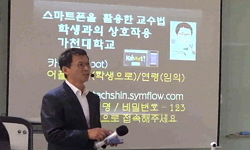
스마트폰을 활용한 학생과의 상호작용 교수법 (가천대학교 특강)
신한대학교 신종우 -
멀티미디어를 활용한 쌍방향 상호작용 워크숍(주성중학교)
신한대학교 신종우
이 자료와 함께 이용한 RISS 자료
나만을 위한 추천자료


