


The basic aim of this study is to provide a case study of the growth of contingent work and clarify what implications it has for female sales workers in the Korean department store industry. More specifically, the study attempts to adopt the perspecti...
다국어 입력
あ
ぁ
か
が
さ
ざ
た
だ
な
は
ば
ぱ
ま
や
ゃ
ら
わ
ゎ
ん
い
ぃ
き
ぎ
し
じ
ち
ぢ
に
ひ
び
ぴ
み
り
う
ぅ
く
ぐ
す
ず
つ
づ
っ
ぬ
ふ
ぶ
ぷ
む
ゆ
ゅ
る
え
ぇ
け
げ
せ
ぜ
て
で
ね
へ
べ
ぺ
め
れ
お
ぉ
こ
ご
そ
ぞ
と
ど
の
ほ
ぼ
ぽ
も
よ
ょ
ろ
を
ア
ァ
カ
サ
ザ
タ
ダ
ナ
ハ
バ
パ
マ
ヤ
ャ
ラ
ワ
ヮ
ン
イ
ィ
キ
ギ
シ
ジ
チ
ヂ
ニ
ヒ
ビ
ピ
ミ
リ
ウ
ゥ
ク
グ
ス
ズ
ツ
ヅ
ッ
ヌ
フ
ブ
プ
ム
ユ
ュ
ル
エ
ェ
ケ
ゲ
セ
ゼ
テ
デ
ヘ
ベ
ペ
メ
レ
オ
ォ
コ
ゴ
ソ
ゾ
ト
ド
ノ
ホ
ボ
ポ
モ
ヨ
ョ
ロ
ヲ
―
http://chineseinput.net/에서 pinyin(병음)방식으로 중국어를 변환할 수 있습니다.
변환된 중국어를 복사하여 사용하시면 됩니다.
예시)
- 中文 을 입력하시려면 zhongwen을 입력하시고 space를누르시면됩니다.
- 北京 을 입력하시려면 beijing을 입력하시고 space를 누르시면 됩니다.
А
Б
В
Г
Д
Е
Ё
Ж
З
И
Й
К
Л
М
Н
О
П
Р
С
Т
У
Ф
Х
Ц
Ч
Ш
Щ
Ъ
Ы
Ь
Э
Ю
Я
а
б
в
г
д
е
ё
ж
з
и
й
к
л
м
н
о
п
р
с
т
у
ф
х
ц
ч
ш
щ
ъ
ы
ь
э
ю
я
′
″
℃
Å
¢
£
¥
¤
℉
‰
$
%
F
₩
㎕
㎖
㎗
ℓ
㎘
㏄
㎣
㎤
㎥
㎦
㎙
㎚
㎛
㎜
㎝
㎞
㎟
㎠
㎡
㎢
㏊
㎍
㎎
㎏
㏏
㎈
㎉
㏈
㎧
㎨
㎰
㎱
㎲
㎳
㎴
㎵
㎶
㎷
㎸
㎹
㎀
㎁
㎂
㎃
㎄
㎺
㎻
㎽
㎾
㎿
㎐
㎑
㎒
㎓
㎔
Ω
㏀
㏁
㎊
㎋
㎌
㏖
㏅
㎭
㎮
㎯
㏛
㎩
㎪
㎫
㎬
㏝
㏐
㏓
㏃
㏉
㏜
㏆
비정규직 여성노동자의 고용구조와 노동통제 : 백화점 판매직 여성노동자를 중심으로 = (The) employment structure and labor control of female contingent workers in Korea : a case study of females workers in the department store industry
한글로보기https://www.riss.kr/link?id=T8586822
- 저자
-
발행사항
대전 : 충남대학교 대학원, 2002
-
학위논문사항
학위논문(박사) -- 충남대학교 대학원 , 사회학과 사회학전공 , 2002. 2
-
발행연도
2002
-
작성언어
한국어
- 주제어
-
KDC
336.6 판사항(4)
-
DDC
301 판사항(20)
-
발행국(도시)
대전
-
형태사항
ix, 177 p. : 삽도 ; 26 cm .
-
일반주기명
부록: 심층면접 조사 항목, 질문지
지도교수: 전광희
참고문헌: p. 162-177 -
소장기관
- 국립중앙도서관

- 충남대학교 도서관

- 국립중앙도서관
-
0
상세조회 -
0
다운로드
인용문이 복사되었습니다.
부가정보
다국어 초록 (Multilingual Abstract)

The basic aim of this study is to provide a case study of the growth of contingent work and clarify what implications it has for female sales workers in the Korean department store industry. More specifically, the study attempts to adopt the perspective of female contingent workers in order to discuss the employment structure of female department store sales workers, the managerial control of their work behavior, and the strategies taken up by the contingent workforce to cope with the managerial practice. The author interviews a sample of female sales workers whose affiliation is with a department store industry in daejeon, Korea, using two survey formats, I.e., the unstructured one intended for in-depth interview and the standard form of questionnaire schedule used to gain insight into the characteristics of study sample.
major findings are summarized as follow:
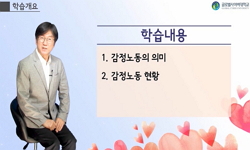
(1) The reason why female workers make up the majority of the workforce hired by the department store industry relates to the property of "emotion labor" which occupies a visibly high proportion in the labor process of the industry. The quality of emotion labor, such as endurance, caring, softness, and kindness, is an asset required for all the department store workers, but it is often equated with the property of "womanhood". For this reason, the emotion labor of female workers is not properly evaluated as a genuine type of work, but degraded simply as "what any worker can do if she is a woman".
The reason why the majority of female department store workers are made up of the "contingent" workforce of the industry primarily comes from the rental sales shop system, which is a characteristic inherent to the "Korean-like" organizational stucture of the industry. The industry has preferred the rental sales shop system to the direct sales shop system beacuse it has had littel accumulated managerial skills but wished to avoid any risky ventures and maintain a stable rate of profit.
In other words, the industry has had a great stake at acquiring a perfectly guaranteed rate of profit by charging a high rate of service fees through the contracting out of sales shops to their member firms. As a consequence, individual member shops have had little interests in maintaining the stable pool of regular workforce and had stronger preference on the nonstandard form of employment over which they could have more leverages depending on their sales volumes.
(2) The reason why ever-married women are hired as contingent workers in the department store industry is that they decided to work there involuntarily because their education and high age prevented them from working as standard workers in the highly competitive labor market. The majority of female workers work involuntarily in the industry, but it is worth noting the growth of voluntary female contingent workforce despite its currently small size. According to the study, the forces behind voluntary choice of nonstandard employment are female part-time workers, mostly from the single with young ages and high educational backgrounds, and female temporary workers, mostly from the ever married with young ages and high educational backgrounds. For the ever-married, domestic work and the rearing of children are the main reasons why they elect the nonstandard form of employment. The current identification of "voluntarism" with them will be entirely different if they believe the social response to their personal needs will be taken adequately and seriously in the near future.
(3) The rental sales shop system, as a critical part of the Korean-like organization structure of the industry, forces the female contingent workers to cooperate with the top-level management not because of the managerial control of their work behavior, but because of their own consideration of benefit maximization. By helping upper-level management achieve their objectives of obtaining profit maximization, each of them wishes to gain personal recognition from the department store direct-line workers and enjoy the privilege of spending everyday life more freely than other colleagues do.
The conflicts between top-level management and female contingent workers are not completely solved or reconciled only by the aspects of reconciling the conflicts of pecuniary interests between the two parties of the industry. A variety of work control strategies are adopted around the rental sales shop system in which the two parties come to negotiate their pecuniary interests. The first one is the strategy of bureaucratic control whose meaning is different from the usual sense of the words, at least for two reasons. First, the strategy of control against female workers is implemented on immediate, intimate, and personal basis, not through the official, hierarchical ladder of the managerial-bureaucratic apparatuses. Second, management does not organize technically equivalent job assignments in accordance with the hierarchy principle; rather they strictly distinguish beforehand those for the direct sale shop workers from those for the rental sales shop workers. the second one is the strategy of patriarchal control. By putting stronger emphasis on the household as their primary activity domain, this strategy forces the female workers to endure dual work at home and in the society. The strategy also helps management force them to accept low wages due to the discontinuation of lifetime work career by indoctrinating the idea of quitting jobs after marriage. Moreover, the strategy often creates the distortion of "feminist" culture and checks the development of healthy thinking by the female workers of womanhood and outside-home work. In doing so, the conflict between management and female sales workers are displaced by the conflict between two genders, or the internal conflicts among the contingent, nonstandard workforce of th industry. The third and last strategy is the indoctrination of enterprise spirits, which contributes to the profit maximization of the industry by the female contingent workforce. Above all, sales performance is the criterion that most clearly reveals the individual value of all sales shops and every female contingent worker within each of them. The retraining program, which is recently being more reinforced by the industry, functions as an official pathway through which managerial demands are channeled to the female workers.
(4) The female contingent workers reveals roughly three types of responses in coping with the managerial control strategies. The first is that they apparently cooperated with the management and accept their demands. in this case, however, they reveal high devotion to their work but their organizational commitment is very low. The reason for this is that the production system of the industry is based on the mechanism that creates consent in the midst of free market competition, not on the mechanism that organizes consent through the full integration of the female contingent workforce into the inside of the organization. The second is that given this type of production system, the female contingent workers chart a self-identification program that helps them raise their work identity at the individual sales shops of th industry. At this time, they attempt to give novel meanings to their work assignments and in doing so, accept the image of "professional sale workers" which the management emphasizes in their education program is quite different from the simply old concept of "marketing girls of ladies". The third and final one is that the female contingent workers start with their perceptive complaints in their work process and proceed to protest against the managerial demands. The protest, as used in this context, is distinguished from the general form of industrial protests such as strikes and struggles in the sense that it is carried out routinely and incessantly. The solutions to such grievances are found on an informal, individual basis; and for this reason, it is not easy to capture the true meaning of protest against the managerial demands They ofter engage in a certain action without any careful thinking of it as a type of oppositional actions.
Indeed, they wish to gain more freedom from the managerial pressures by violating or avoiding the managerial directives or demands rather than to lessen the pressures coming from the coercive management, which is the direct cause of oppositional actions against them in the industry.
Major Terminology: Department Store, Contingent Work, Employment Structure, Labor Control, Emotion Labor, Rental Sales Shop System, Voluntary Contingent Work, Involuntary Contingent Work
major findings are summarized as follow:
(1) The reason why female workers make up the majority of the workforce hired by the department store industry relates to the property of "emotion labor" which occupies a visibly high proportion in the labor process of the industry. The quality of emotion labor, such as endurance, caring, softness, and kindness, is an asset required for all the department store workers, but it is often equated with the property of "womanhood". For this reason, the emotion labor of female workers is not properly evaluated as a genuine type of work, but degraded simply as "what any worker can do if she is a woman".
The reason why the majority of female department store workers are made up of the "contingent" workforce of the industry primarily comes from the rental sales shop system, which is a characteristic inherent to the "Korean-like" organizational stucture of the industry. The industry has preferred the rental sales shop system to the direct sales shop system beacuse it has had littel accumulated managerial skills but wished to avoid any risky ventures and maintain a stable rate of profit.
In other words, the industry has had a great stake at acquiring a perfectly guaranteed rate of profit by charging a high rate of service fees through the contracting out of sales shops to their member firms. As a consequence, individual member shops have had little interests in maintaining the stable pool of regular workforce and had stronger preference on the nonstandard form of employment over which they could have more leverages depending on their sales volumes.
(2) The reason why ever-married women are hired as contingent workers in the department store industry is that they decided to work there involuntarily because their education and high age prevented them from working as standard workers in the highly competitive labor market. The majority of female workers work involuntarily in the industry, but it is worth noting the growth of voluntary female contingent workforce despite its currently small size. According to the study, the forces behind voluntary choice of nonstandard employment are female part-time workers, mostly from the single with young ages and high educational backgrounds, and female temporary workers, mostly from the ever married with young ages and high educational backgrounds. For the ever-married, domestic work and the rearing of children are the main reasons why they elect the nonstandard form of employment. The current identification of "voluntarism" with them will be entirely different if they believe the social response to their personal needs will be taken adequately and seriously in the near future.
(3) The rental sales shop system, as a critical part of the Korean-like organization structure of the industry, forces the female contingent workers to cooperate with the top-level management not because of the managerial control of their work behavior, but because of their own consideration of benefit maximization. By helping upper-level management achieve their objectives of obtaining profit maximization, each of them wishes to gain personal recognition from the department store direct-line workers and enjoy the privilege of spending everyday life more freely than other colleagues do.
The conflicts between top-level management and female contingent workers are not completely solved or reconciled only by the aspects of reconciling the conflicts of pecuniary interests between the two parties of the industry. A variety of work control strategies are adopted around the rental sales shop system in which the two parties come to negotiate their pecuniary interests. The first one is the strategy of bureaucratic control whose meaning is different from the usual sense of the words, at least for two reasons. First, the strategy of control against female workers is implemented on immediate, intimate, and personal basis, not through the official, hierarchical ladder of the managerial-bureaucratic apparatuses. Second, management does not organize technically equivalent job assignments in accordance with the hierarchy principle; rather they strictly distinguish beforehand those for the direct sale shop workers from those for the rental sales shop workers. the second one is the strategy of patriarchal control. By putting stronger emphasis on the household as their primary activity domain, this strategy forces the female workers to endure dual work at home and in the society. The strategy also helps management force them to accept low wages due to the discontinuation of lifetime work career by indoctrinating the idea of quitting jobs after marriage. Moreover, the strategy often creates the distortion of "feminist" culture and checks the development of healthy thinking by the female workers of womanhood and outside-home work. In doing so, the conflict between management and female sales workers are displaced by the conflict between two genders, or the internal conflicts among the contingent, nonstandard workforce of th industry. The third and last strategy is the indoctrination of enterprise spirits, which contributes to the profit maximization of the industry by the female contingent workforce. Above all, sales performance is the criterion that most clearly reveals the individual value of all sales shops and every female contingent worker within each of them. The retraining program, which is recently being more reinforced by the industry, functions as an official pathway through which managerial demands are channeled to the female workers.
(4) The female contingent workers reveals roughly three types of responses in coping with the managerial control strategies. The first is that they apparently cooperated with the management and accept their demands. in this case, however, they reveal high devotion to their work but their organizational commitment is very low. The reason for this is that the production system of the industry is based on the mechanism that creates consent in the midst of free market competition, not on the mechanism that organizes consent through the full integration of the female contingent workforce into the inside of the organization. The second is that given this type of production system, the female contingent workers chart a self-identification program that helps them raise their work identity at the individual sales shops of th industry. At this time, they attempt to give novel meanings to their work assignments and in doing so, accept the image of "professional sale workers" which the management emphasizes in their education program is quite different from the simply old concept of "marketing girls of ladies". The third and final one is that the female contingent workers start with their perceptive complaints in their work process and proceed to protest against the managerial demands. The protest, as used in this context, is distinguished from the general form of industrial protests such as strikes and struggles in the sense that it is carried out routinely and incessantly. The solutions to such grievances are found on an informal, individual basis; and for this reason, it is not easy to capture the true meaning of protest against the managerial demands They ofter engage in a certain action without any careful thinking of it as a type of oppositional actions.
Indeed, they wish to gain more freedom from the managerial pressures by violating or avoiding the managerial directives or demands rather than to lessen the pressures coming from the coercive management, which is the direct cause of oppositional actions against them in the industry.
Major Terminology: Department Store, Contingent Work, Employment Structure, Labor Control, Emotion Labor, Rental Sales Shop System, Voluntary Contingent Work, Involuntary Contingent Work
The basic aim of this study is to provide a case study of the growth of contingent work and clarify what implications it has for female sales workers in the Korean department store industry. More specifically, the study attempts to adopt the perspective of female contingent workers in order to discuss the employment structure of female department store sales workers, the managerial control of their work behavior, and the strategies taken up by the contingent workforce to cope with the managerial practice. The author interviews a sample of female sales workers whose affiliation is with a department store industry in daejeon, Korea, using two survey formats, I.e., the unstructured one intended for in-depth interview and the standard form of questionnaire schedule used to gain insight into the characteristics of study sample.
major findings are summarized as follow:
(1) The reason why female workers make up the majority of the workforce hired by the department store industry relates to the property of "emotion labor" which occupies a visibly high proportion in the labor process of the industry. The quality of emotion labor, such as endurance, caring, softness, and kindness, is an asset required for all the department store workers, but it is often equated with the property of "womanhood". For this reason, the emotion labor of female workers is not properly evaluated as a genuine type of work, but degraded simply as "what any worker can do if she is a woman".
The reason why the majority of female department store workers are made up of the "contingent" workforce of the industry primarily comes from the rental sales shop system, which is a characteristic inherent to the "Korean-like" organizational stucture of the industry. The industry has preferred the rental sales shop system to the direct sales shop system beacuse it has had littel accumulated managerial skills but wished to avoid any risky ventures and maintain a stable rate of profit.
In other words, the industry has had a great stake at acquiring a perfectly guaranteed rate of profit by charging a high rate of service fees through the contracting out of sales shops to their member firms. As a consequence, individual member shops have had little interests in maintaining the stable pool of regular workforce and had stronger preference on the nonstandard form of employment over which they could have more leverages depending on their sales volumes.
(2) The reason why ever-married women are hired as contingent workers in the department store industry is that they decided to work there involuntarily because their education and high age prevented them from working as standard workers in the highly competitive labor market. The majority of female workers work involuntarily in the industry, but it is worth noting the growth of voluntary female contingent workforce despite its currently small size. According to the study, the forces behind voluntary choice of nonstandard employment are female part-time workers, mostly from the single with young ages and high educational backgrounds, and female temporary workers, mostly from the ever married with young ages and high educational backgrounds. For the ever-married, domestic work and the rearing of children are the main reasons why they elect the nonstandard form of employment. The current identification of "voluntarism" with them will be entirely different if they believe the social response to their personal needs will be taken adequately and seriously in the near future.
(3) The rental sales shop system, as a critical part of the Korean-like organization structure of the industry, forces the female contingent workers to cooperate with the top-level management not because of the managerial control of their work behavior, but because of their own consideration of benefit maximization. By helping upper-level management achieve their objectives of obtaining profit maximization, each of them wishes to gain personal recognition from the department store direct-line workers and enjoy the privilege of spending everyday life more freely than other colleagues do.
The conflicts between top-level management and female contingent workers are not completely solved or reconciled only by the aspects of reconciling the conflicts of pecuniary interests between the two parties of the industry. A variety of work control strategies are adopted around the rental sales shop system in which the two parties come to negotiate their pecuniary interests. The first one is the strategy of bureaucratic control whose meaning is different from the usual sense of the words, at least for two reasons. First, the strategy of control against female workers is implemented on immediate, intimate, and personal basis, not through the official, hierarchical ladder of the managerial-bureaucratic apparatuses. Second, management does not organize technically equivalent job assignments in accordance with the hierarchy principle; rather they strictly distinguish beforehand those for the direct sale shop workers from those for the rental sales shop workers. the second one is the strategy of patriarchal control. By putting stronger emphasis on the household as their primary activity domain, this strategy forces the female workers to endure dual work at home and in the society. The strategy also helps management force them to accept low wages due to the discontinuation of lifetime work career by indoctrinating the idea of quitting jobs after marriage. Moreover, the strategy often creates the distortion of "feminist" culture and checks the development of healthy thinking by the female workers of womanhood and outside-home work. In doing so, the conflict between management and female sales workers are displaced by the conflict between two genders, or the internal conflicts among the contingent, nonstandard workforce of th industry. The third and last strategy is the indoctrination of enterprise spirits, which contributes to the profit maximization of the industry by the female contingent workforce. Above all, sales performance is the criterion that most clearly reveals the individual value of all sales shops and every female contingent worker within each of them. The retraining program, which is recently being more reinforced by the industry, functions as an official pathway through which managerial demands are channeled to the female workers.
(4) The female contingent workers reveals roughly three types of responses in coping with the managerial control strategies. The first is that they apparently cooperated with the management and accept their demands. in this case, however, they reveal high devotion to their work but their organizational commitment is very low. The reason for this is that the production system of the industry is based on the mechanism that creates consent in the midst of free market competition, not on the mechanism that organizes consent through the full integration of the female contingent workforce into the inside of the organization. The second is that given this type of production system, the female contingent workers chart a self-identification program that helps them raise their work identity at the individual sales shops of th industry. At this time, they attempt to give novel meanings to their work assignments and in doing so, accept the image of "professional sale workers" which the management emphasizes in their education program is quite different from the simply old concept of "marketing girls of ladies". The third and final one is that the female contingent workers start with their perceptive complaints in their work process and proceed to protest against the managerial demands. The protest, as used in this context, is distinguished from the general form of industrial protests such as strikes and struggles in the sense that it is carried out routinely and incessantly. The solutions to such grievances are found on an informal, individual basis; and for this reason, it is not easy to capture the true meaning of protest against the managerial demands They ofter engage in a certain action without any careful thinking of it as a type of oppositional actions.
Indeed, they wish to gain more freedom from the managerial pressures by violating or avoiding the managerial directives or demands rather than to lessen the pressures coming from the coercive management, which is the direct cause of oppositional actions against them in the industry.
Major Terminology: Department Store, Contingent Work, Employment Structure, Labor Control, Emotion Labor, Rental Sales Shop System, Voluntary Contingent Work, Involuntary Contingent Work
목차 (Table of Contents)
- 목차
- 제1장 머리말 = 1
- 제1절 문제제기 = 1
- 제2절 논문의 구성 = 6
- 제2장 이론적 배경 = 8
- 목차
- 제1장 머리말 = 1
- 제1절 문제제기 = 1
- 제2절 논문의 구성 = 6
- 제2장 이론적 배경 = 8
- 제1절 비정규 노동의 개념 = 8
- 제2절 상품유통업 여성노동에 대한 시각 = 11
- 1. 성적직무분리의 관점 = 11
- 2. 감정노동의 관점 = 15
- 제3절 비정규직 여성노동에 대한 통제 = 17
- 제3장 분석틀 및 연구 방법 = 22
- 제1절 분석틀 = 22
- 제2절 연구 대상 및 연구 방법 = 29
- 제4장 비정규직 여성노동자의 고용구조 = 43
- 제1절 노동과정과 작업조직 = 43
- 1. 노동과정의 특성 = 43
- 2. 작업조직의 특성 = 54
- 제2절 고용구조 = 60
- 1. 인적특성 = 60
- 2. 고용계약 형태 및 내용 = 65
- 3. 임금 및 노동조건 = 71
- 4. 비정규직의 자발성 여부 = 80
- 재3절 소결 = 87
- 제5장 비정규직 여성노동자에 대한 노동통제의 구조 = 89
- 제1절 노동통제의 물질적 기초 = 89
- 1. 임대매장체제와 시장 경쟁 관계 = 89
- 2. 직접적 통제체제와 종속적 관계 = 96
- 제2절 노동통제 전략의 유형 = 99
- 1. 관료제적 통제 = 99
- 2. 가부장적 통제 = 114
- 3. 기업 이념의 주입 = 117
- 제3절 소결 = 126
- 제6장 노동통제에 대한 비정규직 여성노동자의 대응 방식 = 129
- 제1절 경영측의 요구에 대한 적극적 수용 = 129
- 제2절 경영측의 요구로부터 노동과정의 의도적 분리 = 135
- 제3절 경영측의 요구에 대한 저항적 수요 = 142
- 제4절 소결 = 149
- 제7장 요약 및 결론 = 152
- 제1절 결과의 요약 = 152
- 제2절 정책적 함의 = 157
- 참고문헌 = 162
- 부록1 심층면접 조사 항목 =194
- 부록2 질문지 =199
- 영문초록 =214
분석정보
연관 공개강의(KOCW)

이 자료와 함께 이용한 RISS 자료
나만을 위한 추천자료


