 국립중앙도서관 "우편 복사 서비스"로 연결 됩니다.


Dong-suk Han presented the theory that Five elements can change and transform to the others between quality(characteristics) of theirs and the quantity(appearance) of theirs, in his book named 『the principle that Change and transformation of Univers...
다국어 입력
あ
ぁ
か
が
さ
ざ
た
だ
な
は
ば
ぱ
ま
や
ゃ
ら
わ
ゎ
ん
い
ぃ
き
ぎ
し
じ
ち
ぢ
に
ひ
び
ぴ
み
り
う
ぅ
く
ぐ
す
ず
つ
づ
っ
ぬ
ふ
ぶ
ぷ
む
ゆ
ゅ
る
え
ぇ
け
げ
せ
ぜ
て
で
ね
へ
べ
ぺ
め
れ
お
ぉ
こ
ご
そ
ぞ
と
ど
の
ほ
ぼ
ぽ
も
よ
ょ
ろ
を
ア
ァ
カ
サ
ザ
タ
ダ
ナ
ハ
バ
パ
マ
ヤ
ャ
ラ
ワ
ヮ
ン
イ
ィ
キ
ギ
シ
ジ
チ
ヂ
ニ
ヒ
ビ
ピ
ミ
リ
ウ
ゥ
ク
グ
ス
ズ
ツ
ヅ
ッ
ヌ
フ
ブ
プ
ム
ユ
ュ
ル
エ
ェ
ケ
ゲ
セ
ゼ
テ
デ
ヘ
ベ
ペ
メ
レ
オ
ォ
コ
ゴ
ソ
ゾ
ト
ド
ノ
ホ
ボ
ポ
モ
ヨ
ョ
ロ
ヲ
―
http://chineseinput.net/에서 pinyin(병음)방식으로 중국어를 변환할 수 있습니다.
변환된 중국어를 복사하여 사용하시면 됩니다.
예시)
- 中文 을 입력하시려면 zhongwen을 입력하시고 space를누르시면됩니다.
- 北京 을 입력하시려면 beijing을 입력하시고 space를 누르시면 됩니다.
А
Б
В
Г
Д
Е
Ё
Ж
З
И
Й
К
Л
М
Н
О
П
Р
С
Т
У
Ф
Х
Ц
Ч
Ш
Щ
Ъ
Ы
Ь
Э
Ю
Я
а
б
в
г
д
е
ё
ж
з
и
й
к
л
м
н
о
п
р
с
т
у
ф
х
ц
ч
ш
щ
ъ
ы
ь
э
ю
я
′
″
℃
Å
¢
£
¥
¤
℉
‰
$
%
F
₩
㎕
㎖
㎗
ℓ
㎘
㏄
㎣
㎤
㎥
㎦
㎙
㎚
㎛
㎜
㎝
㎞
㎟
㎠
㎡
㎢
㏊
㎍
㎎
㎏
㏏
㎈
㎉
㏈
㎧
㎨
㎰
㎱
㎲
㎳
㎴
㎵
㎶
㎷
㎸
㎹
㎀
㎁
㎂
㎃
㎄
㎺
㎻
㎽
㎾
㎿
㎐
㎑
㎒
㎓
㎔
Ω
㏀
㏁
㎊
㎋
㎌
㏖
㏅
㎭
㎮
㎯
㏛
㎩
㎪
㎫
㎬
㏝
㏐
㏓
㏃
㏉
㏜
㏆
韓東錫의 五行 質量變化에 관한 고찰 = The study about Dong-suk Han’s Theory, that is Change-Transformation Between Quality and Quantity of Five Elements
한글로보기https://www.riss.kr/link?id=T15672110
- 저자
-
발행사항
대전 : 대전대학교 대학원, 2020
- 학위논문사항
-
발행연도
2020
-
작성언어
한국어
- 주제어
-
발행국(도시)
대전
-
형태사항
47 ; 26 cm
-
일반주기명
지도교수: 윤창열
-
UCI식별코드
I804:25002-200000320856
-
소장기관
- 대전대학교 도서관

- 대전대학교 도서관
-
0
상세조회 -
0
다운로드
인용문이 복사되었습니다.
부가정보
다국어 초록 (Multilingual Abstract)

Dong-suk Han presented the theory that Five elements can change and transform to the others between quality(characteristics) of theirs and the quantity(appearance) of theirs, in his book named 『the principle that Change and transformation of Universe(宇宙變化의 原理)』
Five Elements’ theory has had various theories for a long time since the past. But Many of the expressions in the 『Hwangjenaegyeong(黃帝內經)』 about ‘Five Elements’ are in different expressions, for example, 木 is confusing whether it means the energy of 木 or a tree. I think that principle of Five elements will be well understood for korean oriental doctors Through the study of Dong-suk’s theory that, Change-transformation Between Five Elements’ Energy and Five primary substances. So I studied this theory by following methods
I summarized the theory that is written in his book “Principles of the change and transformation of Universe, and I Applyed Dong suk’s theory to two way of combining that Brotherly Five Elements with Conjugal Five Elements of Each Heavenly Stems. and placing Zang-Fu on the Ten Heavenly Stems(THS) and in addition I Apply Dong suk’s theory to the korean oriental theory that Five Elements make Five tastes and Five Tastes generate Five Zang written in many chapters of 『Hwangjenaegyeong(黃帝內經)』
Based on the this research , it was clear that Dong-suk’s theory can be applied to various traditional theories of Korean medicine, especially following two major points.
First, Dong suk’s theory is well observed by Combining Zang-Fu to THS.
The placement of five Zang and Five Fu(五臟五腑) in THS confirmed that some of the contents of this theory were included in Brotherly Five Elements and Conjugal Five Elements. 乙 is assigned to Liver(肝). 乙 is 木 in Brotherly Five Elements. but 乙 is also 金 in Conjugal Five Elements. So Liver’s fuction can be confirmed to contain the contents of 木金's CTQQF. 戊 is assigned to Stomach(胃). 戊 is 土 in Brotherly Five Elements. but 戊 is also 火 in Conjugal Five Elements. So Stomach’s fuction was found to contain the contents of 土火's CTQQF.
Second, Dong suk’s theory is proven that Five tastes generate Five Zang’s substance but Each of Five Zang’s energy(Qi氣) works in the opposite direction to Five tastes’ fuctions. and it can be called Body-Function Perspective of Five Elements(五行體用觀). We can read that sourness makes a liver, bitter taste makes heart, sweet taste makes spleen, spicy taste makes lung, and salty taste makes kidney in many chapters of 『Hwangjenaegyeong(黃帝內經)』. In particular, The sour and spicy flavor make liver and lung, respectively, and the nature of the taste and the essential tendency of the two organs are opposite to each other, indicating that CTQQF of 木金 and 金木 is related in the liver and the lung.
In addition, Dong suk’s theroy can be observed even a little by pentagonal symmetry hypothesis based on one vertex(水) I created, and by application of Korean phonemes to the Five Elements.
Dong-suk Han presented the theory that Five elements can change and transform to the others between quality(characteristics) of theirs and the quantity(appearance) of theirs, in his book named 『the principle that Change and transformation of Universe(宇宙變化의 原理)』
Five Elements’ theory has had various theories for a long time since the past. But Many of the expressions in the 『Hwangjenaegyeong(黃帝內經)』 about ‘Five Elements’ are in different expressions, for example, 木 is confusing whether it means the energy of 木 or a tree. I think that principle of Five elements will be well understood for korean oriental doctors Through the study of Dong-suk’s theory that, Change-transformation Between Five Elements’ Energy and Five primary substances. So I studied this theory by following methods
I summarized the theory that is written in his book “Principles of the change and transformation of Universe, and I Applyed Dong suk’s theory to two way of combining that Brotherly Five Elements with Conjugal Five Elements of Each Heavenly Stems. and placing Zang-Fu on the Ten Heavenly Stems(THS) and in addition I Apply Dong suk’s theory to the korean oriental theory that Five Elements make Five tastes and Five Tastes generate Five Zang written in many chapters of 『Hwangjenaegyeong(黃帝內經)』
Based on the this research , it was clear that Dong-suk’s theory can be applied to various traditional theories of Korean medicine, especially following two major points.
First, Dong suk’s theory is well observed by Combining Zang-Fu to THS.
The placement of five Zang and Five Fu(五臟五腑) in THS confirmed that some of the contents of this theory were included in Brotherly Five Elements and Conjugal Five Elements. 乙 is assigned to Liver(肝). 乙 is 木 in Brotherly Five Elements. but 乙 is also 金 in Conjugal Five Elements. So Liver’s fuction can be confirmed to contain the contents of 木金's CTQQF. 戊 is assigned to Stomach(胃). 戊 is 土 in Brotherly Five Elements. but 戊 is also 火 in Conjugal Five Elements. So Stomach’s fuction was found to contain the contents of 土火's CTQQF.
Second, Dong suk’s theory is proven that Five tastes generate Five Zang’s substance but Each of Five Zang’s energy(Qi氣) works in the opposite direction to Five tastes’ fuctions. and it can be called Body-Function Perspective of Five Elements(五行體用觀). We can read that sourness makes a liver, bitter taste makes heart, sweet taste makes spleen, spicy taste makes lung, and salty taste makes kidney in many chapters of 『Hwangjenaegyeong(黃帝內經)』. In particular, The sour and spicy flavor make liver and lung, respectively, and the nature of the taste and the essential tendency of the two organs are opposite to each other, indicating that CTQQF of 木金 and 金木 is related in the liver and the lung.
In addition, Dong suk’s theroy can be observed even a little by pentagonal symmetry hypothesis based on one vertex(水) I created, and by application of Korean phonemes to the Five Elements.
목차 (Table of Contents)
- Ⅰ. 서론 1
- Ⅱ. 본론 5
- 1. 한동석의 오행 질량변화 이론 세부 고찰 5
- 1) ‘木氣’와 ‘나무’의 木金 질량변화 6
- 2) ‘火氣’와 ‘불’의 火土 질량변화 7
- Ⅰ. 서론 1
- Ⅱ. 본론 5
- 1. 한동석의 오행 질량변화 이론 세부 고찰 5
- 1) ‘木氣’와 ‘나무’의 木金 질량변화 6
- 2) ‘火氣’와 ‘불’의 火土 질량변화 7
- 3) ‘土氣’와 ‘흙’의 土火 질량변화 8
- 4) ‘金氣’와 ‘쇠’의 金木 질량변화 9
- 5) ‘水氣’와 ‘물’의 성질 - ‘물’에 있어서는 질량변화 없음 10
- 2. 인체 五臟의 質量變化 정리 고찰 11
- 1) 肝木 -> 肝金 11
- 2) 心火 -> 心土 12
- 3) 脾土 -> 脾火 14
- 4) 肺金 -> 肺木 16
- 5) 腎水 -> 腎水 16
- 3. 五臟의 사상배속과 五臟六腑의 天干배속을 통한 五行 質量變化 고찰 18
- 1) 『내경』 속 五臟의 四象配屬을 통한 五行 質量變化 18
- 2) 王氷注 『黃帝內經·素問』의 「六節藏象論」의 誤記 校正 19
- 3) 五臟六腑의 天干배속을 통한 오행 質量變化 고찰 20
- (1) 膽은 一面 木(甲三木), 一面 土(甲己化土) 22
- (2) 肝은 一面 木(乙八木), 一面 金(乙庚化金) 23
- (3) 小腸은 一面 火(丙七火), 一面 水(丙辛化水) 23
- (4) 心臟은 一面 火(丁二火), 一面 木(丁壬化木) 23
- (5) 胃는 一面 土(戊五土), 一面 火(戊癸化火) 23
- (6) 脾는 형제오행과 부부오행이 모두 土(己十土, 甲己化土) 24
- (7) 大腸은 형제오행과 부부오행이 모두 金(庚九金, 乙庚化金) 24
- (8) 肺는 一面 金(辛四金), 一面 水(丙辛化水) 24
- (9) 膀胱은 一面 水(壬一水), 一面 木(丁壬化木) 24
- (10) 腎은 一面 水(癸六水), 一面 火(戊癸化火) 25
- 4. 五味入五臟과 五臟欲을 통한 五臟의 質量變化 고찰 25
- 1) 五味의 作用 25
- 2) 五臟生成의 과정(天五行 -> 地六氣 -> 形五行 -> 五味 -> 五臟) 26
- 5. 질량변화의 기타 가설의 입론 29
- 1) 오각형의 접힘을 통한 數理的 가설 모델 29
- (1) 원과 오각형 작도를 통한 음양오행의 탄생 취상 32
- (2) 오각형의 접힘을 통한 오행 질량변화 취상 33
- 2) ‘나무, 불, 흙, 쇠, 물’ 해당 어근이 포함된 한글 속에 질량변화 개념 있음을 가설함 35
- (1) 나무 (목 -> 금) 36
- (2) 불 (화 -> 토) 37
- (3) 흙 (토 -> 화) 38
- (4) 쇠 (금 -> 목) 39
- (5) 물 (수 -> 수) 40
- Ⅲ. 결론 41
- 참고문헌 43
- 영문초록 45
분석정보
연관 공개강의(KOCW)


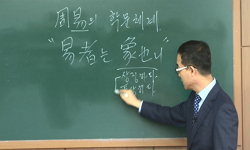
이 자료와 함께 이용한 RISS 자료
나만을 위한 추천자료
로그인하고 관련된 다양한 학술자료를 확인해 보세요.
로그인

