 국립중앙도서관 "우편 복사 서비스"로 연결 됩니다.


 RISS
RISS KISS
KISS
There are 17 cyber universities in Korea but they have revealed many problems of managements and accomplishments. Some of the problems are threatening the quality of teaching and learning, and they are due to negligence of strict and fair management o...
다국어 입력
あ
ぁ
か
が
さ
ざ
た
だ
な
は
ば
ぱ
ま
や
ゃ
ら
わ
ゎ
ん
い
ぃ
き
ぎ
し
じ
ち
ぢ
に
ひ
び
ぴ
み
り
う
ぅ
く
ぐ
す
ず
つ
づ
っ
ぬ
ふ
ぶ
ぷ
む
ゆ
ゅ
る
え
ぇ
け
げ
せ
ぜ
て
で
ね
へ
べ
ぺ
め
れ
お
ぉ
こ
ご
そ
ぞ
と
ど
の
ほ
ぼ
ぽ
も
よ
ょ
ろ
を
ア
ァ
カ
サ
ザ
タ
ダ
ナ
ハ
バ
パ
マ
ヤ
ャ
ラ
ワ
ヮ
ン
イ
ィ
キ
ギ
シ
ジ
チ
ヂ
ニ
ヒ
ビ
ピ
ミ
リ
ウ
ゥ
ク
グ
ス
ズ
ツ
ヅ
ッ
ヌ
フ
ブ
プ
ム
ユ
ュ
ル
エ
ェ
ケ
ゲ
セ
ゼ
テ
デ
ヘ
ベ
ペ
メ
レ
オ
ォ
コ
ゴ
ソ
ゾ
ト
ド
ノ
ホ
ボ
ポ
モ
ヨ
ョ
ロ
ヲ
―
http://chineseinput.net/에서 pinyin(병음)방식으로 중국어를 변환할 수 있습니다.
변환된 중국어를 복사하여 사용하시면 됩니다.
예시)
- 中文 을 입력하시려면 zhongwen을 입력하시고 space를누르시면됩니다.
- 北京 을 입력하시려면 beijing을 입력하시고 space를 누르시면 됩니다.
А
Б
В
Г
Д
Е
Ё
Ж
З
И
Й
К
Л
М
Н
О
П
Р
С
Т
У
Ф
Х
Ц
Ч
Ш
Щ
Ъ
Ы
Ь
Э
Ю
Я
а
б
в
г
д
е
ё
ж
з
и
й
к
л
м
н
о
п
р
с
т
у
ф
х
ц
ч
ш
щ
ъ
ы
ь
э
ю
я
′
″
℃
Å
¢
£
¥
¤
℉
‰
$
%
F
₩
㎕
㎖
㎗
ℓ
㎘
㏄
㎣
㎤
㎥
㎦
㎙
㎚
㎛
㎜
㎝
㎞
㎟
㎠
㎡
㎢
㏊
㎍
㎎
㎏
㏏
㎈
㎉
㏈
㎧
㎨
㎰
㎱
㎲
㎳
㎴
㎵
㎶
㎷
㎸
㎹
㎀
㎁
㎂
㎃
㎄
㎺
㎻
㎽
㎾
㎿
㎐
㎑
㎒
㎓
㎔
Ω
㏀
㏁
㎊
㎋
㎌
㏖
㏅
㎭
㎮
㎯
㏛
㎩
㎪
㎫
㎬
㏝
㏐
㏓
㏃
㏉
㏜
㏆

원격대학 평가지표 개발 연구 = Development of Standards for Institutional Evaluation of Cyber University in Korea
한글로보기https://www.riss.kr/link?id=A101959677
- 저자
- 발행기관
- 학술지명
- 권호사항
-
발행연도
2007
-
작성언어
-
-
주제어
원격대학 ; 평가지표 ; 대학평가 ; 이러닝 ; Distance University ; Cyber University ; University Evaluation ; e-Learning
-
KDC
300
-
등재정보
KCI등재
-
자료형태
학술저널
- 발행기관 URL
-
수록면
79-111(33쪽)
-
KCI 피인용횟수
28
- 제공처
- 소장기관
-
0
상세조회 -
0
다운로드
인용문이 복사되었습니다.
부가정보
다국어 초록 (Multilingual Abstract)

There are 17 cyber universities in Korea but they have revealed many problems of managements and accomplishments. Some of the problems are threatening the quality of teaching and learning, and they are due to negligence of strict and fair management of universities. The purpose of this study was to develope a set of evaluation standards that can be used for quality evaluation of cyber universities. The study followed the following stages: 1. Development of evaluation framework. 2. Development of the first draft of evaluation standards. 3. The validation of evaluation standards. 4. Development of the final evaluation standards. Four principles for standard development considered in the study were ‘improvement of teaching-learning’, ‘enhancement of administration/management efficiency’, ‘prevention of management corruption’, and ‘addressing the vision of each university’. Among these principles, improvement of teaching-learning was highly emphasized throughout the development process. The study suggested evaluation standards in 6 main areas: ① educational planning, ② instruction, ③ human resources, ④ material, ⑤ administration and management, and ⑥ educational outcomes. For the above 6 areas, a total of 500 points were allocated according to the importance determined by the research team. Educational planning(9%, 45 points) is about educational objectives and curriculum. Instruction(31%, 155 points) is about instructional design, content development, instructional implementation, and evaluation of teaching & learning. Human resources(20%, 100 points) incorporates faculty, staff, and students. Material resources(15%, 75 points) includes facilities, equipments, and hardware and software system. Administration and management(16%, 80 points) is about administrative and managerial procedures. Finally, educational outcome(9%, 45 points) is about student satisfaction and social recognition of the university. The study explains the use of the above evaluation standards and suggests the future directions of evaluation system for cyber universities in Korea.
There are 17 cyber universities in Korea but they have revealed many problems of managements and accomplishments. Some of the problems are threatening the quality of teaching and learning, and they are due to negligence of strict and fair management of universities. The purpose of this study was to develope a set of evaluation standards that can be used for quality evaluation of cyber universities. The study followed the following stages: 1. Development of evaluation framework. 2. Development of the first draft of evaluation standards. 3. The validation of evaluation standards. 4. Development of the final evaluation standards. Four principles for standard development considered in the study were ‘improvement of teaching-learning’, ‘enhancement of administration/management efficiency’, ‘prevention of management corruption’, and ‘addressing the vision of each university’. Among these principles, improvement of teaching-learning was highly emphasized throughout the development process. The study suggested evaluation standards in 6 main areas: ① educational planning, ② instruction, ③ human resources, ④ material, ⑤ administration and management, and ⑥ educational outcomes. For the above 6 areas, a total of 500 points were allocated according to the importance determined by the research team. Educational planning(9%, 45 points) is about educational objectives and curriculum. Instruction(31%, 155 points) is about instructional design, content development, instructional implementation, and evaluation of teaching & learning. Human resources(20%, 100 points) incorporates faculty, staff, and students. Material resources(15%, 75 points) includes facilities, equipments, and hardware and software system. Administration and management(16%, 80 points) is about administrative and managerial procedures. Finally, educational outcome(9%, 45 points) is about student satisfaction and social recognition of the university. The study explains the use of the above evaluation standards and suggests the future directions of evaluation system for cyber universities in Korea.
참고문헌 (Reference)
1 "한국미국영국 대학평가 비교연구: 대교협, CHEA, QAA를 중심으로" 15 (15): 1-32, 2005
2 "한국 교육평가의 쟁점과 대안" 서울: 교육과학사 2000
3 "평생교육 정보화 지표 개발 연구" 한국교육학술정보원 2003
4 "초중등교육 정보화지표 개발 연구" 2001
5 "웹기반 학습 교육프로그램 운영전략의 효과성에 대한 국제 비교연구" 한국방송통신대학교 원격교육연구소 2005
6 "웹 기반 교육체제의 질 관리 모형 연구" 2002
7 "원격대학현황" 교육인적자원부 지식정보기반과 2006b
8 "원격대학의 현황과 전망. 2005 e-러닝백서" 한국사이버교육학회 2006
9 "원격대학의 질 관리 및 원격교육에 대한 학점인정방안 연구" 교육부 2000
10 "원격대학 형태의 평생교육시설 설치요령 안내" 교육인적자원부 평생학습지원과 2005
1 "한국미국영국 대학평가 비교연구: 대교협, CHEA, QAA를 중심으로" 15 (15): 1-32, 2005
2 "한국 교육평가의 쟁점과 대안" 서울: 교육과학사 2000
3 "평생교육 정보화 지표 개발 연구" 한국교육학술정보원 2003
4 "초중등교육 정보화지표 개발 연구" 2001
5 "웹기반 학습 교육프로그램 운영전략의 효과성에 대한 국제 비교연구" 한국방송통신대학교 원격교육연구소 2005
6 "웹 기반 교육체제의 질 관리 모형 연구" 2002
7 "원격대학현황" 교육인적자원부 지식정보기반과 2006b
8 "원격대학의 현황과 전망. 2005 e-러닝백서" 한국사이버교육학회 2006
9 "원격대학의 질 관리 및 원격교육에 대한 학점인정방안 연구" 교육부 2000
10 "원격대학 형태의 평생교육시설 설치요령 안내" 교육인적자원부 평생학습지원과 2005
11 "원격대학 학사운영관리지침" 교육인적자원부 지식정보기반과 2006a
12 "원격대학 운영실태 조사 및 개선방안 연구" 2001
13 "원격교육학 개론" 교육과학사 2000
14 "원격교육학 개론" 서울: 교육과학사 2000
15 "원격교육의 이해와 적용" 지셈 1999
16 "원격교육의 이해" 교육과학사 2004
17 "원격교육연수원 및 원격교육대학원 모형개발 및 운영방안 연구" 7 (7): 134-167, 2001
18 "원격교육 교수 학습을 위한 원격교육론" 한올 2003
19 "언론기관 대학평가의 발전 과제" 12 (12): 167-190, 2001
20 "선진국의 사례를 통한 사이버 교육 효과성 분석 연구" 한국교육학술정보원 2005
21 "사이버대학의 질 관리를 위한 핵심영역과 평가항목 규명" 2004
22 "사이버대학의 질 관리를 위한 준거 개발" 21 (21): 95-130, 2005
23 "사이버대학의 질 관리 체제 구축 방안 연구" 2005
24 "사이버대학 모니터링 연구" 한국교육학술정보원 2002
25 "사이버 교육체제 실태조사 연구" 한국교육학술정보원 2001
26 "대학평가지표의 준거 타당성에 관한 논증" 40 (40): 81-102, 2002
27 "대학교육의 효과성 개념과 측정 모형 탐색과 적용 고등교육연구" 97-136, 1994
28 "고등교육 정보화지표 개발 연구" 2002
29 "가상원격교육체제의 질 관리를 위한 평가모형의 개발" 4 (4): 1-9, 2001
30 "e-learning 질 관리를 위한 평가요소 분석" 2006
31 "The Management of Quality in Open and Distance LearningIn Indira Gandhi National Open University, Structure and Management of Open Learning Systems" New Delhi 1 : 95-109, 1995
32 "Restructuring the University for Technology Change" 2004
33 "Models of Open Learning" 1 (1): 2-, 2001
34 "Measuring quality in online programs" 6 : 159-177, 2003
35 "In Allison Rossett (ed.). The ASTD e-learning handbook: Best Practices, strategies, and case studies for an emerging field" McGraw Hill 2002
36 "ISO9000 시리즈를 이용한 대학평가시스템" 19 : 129-141, 2001
37 "Developing Effective E-learning Courses" 2004
38 "A framework for Web-based learning" Egnlewood Cliffs, NJ: Educational technology Publication Inc. 2001
39 "2주기 대학종합평가인정제 시행을 위한 대학 종합평가 편람" 한국대학교육협의회 2001
동일학술지(권/호) 다른 논문
-
- 한국교육공학회
- 박기용 ( Kiyong Park )
- 2007
- KCI등재
-
구성주의 학습 환경에 적합한 평가전략: 참평가와 즉각적 피드백
- 한국교육공학회
- 김소영 ( Soyoung Kim )
- 2007
- KCI등재
-
예비교사들의 학습스타일과 협력적 개념도 작성이 문제해결에 미치는 영향
- 한국교육공학회
- 정선영 ( Sunyoung Joung )
- 2007
- KCI등재
분석정보
인용정보 인용지수 설명보기
학술지 이력
| 연월일 | 이력구분 | 이력상세 | 등재구분 |
|---|---|---|---|
| 2027 | 평가 | 재인증평가 신청대상 (재인증) | |
| 2021-01-01 | 등재 | 등재학술지 유지 (재인증) | |
| 2018-01-01 | 등재 | 등재학술지 유지 (등재유지) | |
| 2015-01-01 | 등재 | 등재학술지 유지 (등재유지) | |
| 2011-01-01 | 등재 | 등재학술지 유지 (등재유지) | |
| 2009-01-01 | 등재 | 등재학술지 유지 (등재유지) | |
| 2007-01-01 | 등재 | 등재학술지 유지 (등재유지) | |
| 2004-01-01 | 등재 | 등재학술지 선정 (등재후보2차) | |
| 2003-01-01 | 등재 | 등재후보 1차 PASS (등재후보1차) |  |
| 2002-01-01 | 등재 | 등재후보 1차 FAIL (등재후보1차) | |
| 1999-07-01 | 등재 | 등재후보학술지 선정 (신규평가) | |
학술지 인용정보
| 기준연도 | WOS-KCI 통합IF(2년) | KCIF(2년) | KCIF(3년) |
|---|---|---|---|
| 2016 | 3.7 | 3.7 | 3.26 |
| KCIF(4년) | KCIF(5년) | 중심성지수(3년) | 즉시성지수 |
| 2.89 | 2.68 | 3.751 | 0.75 |
연관 공개강의(KOCW)
-
2014 이러닝 국제 콘퍼런스: Analysis of e-Learning Program Management for Adults in Korea
한국교육정보진흥협회 Don-Min, Choi -
2014 이러닝 국제 콘퍼런스 : Understand Seniors’ Motivation in e-Learning through
한국교육정보진흥협회 Thomas Kuan -
2014 이러닝 국제 콘퍼런스 : Developing the PETAL e-Learning Platform~
한국교육정보진흥협회 Vincent Tam -
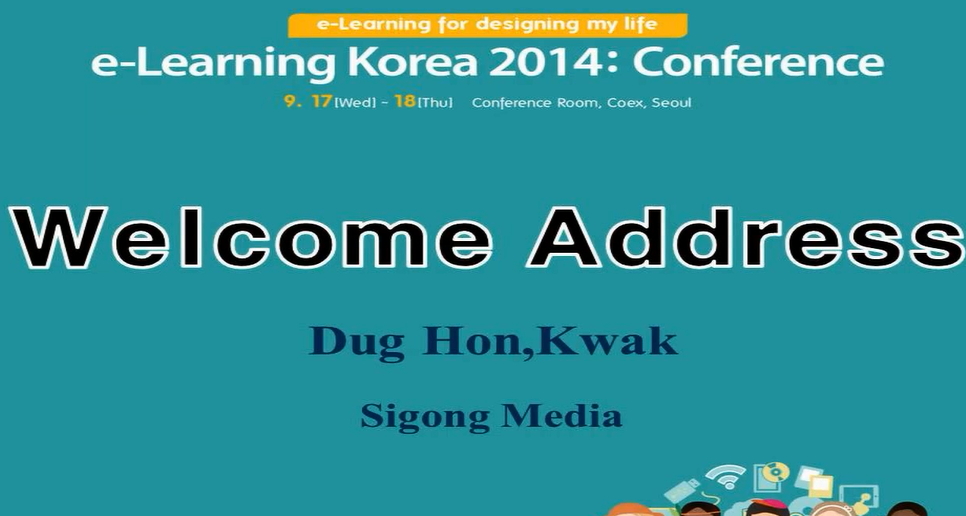
2014 이러닝 국제 콘퍼런스 : Whats Wrong with e-books and How to Fix It
한국교육학술정보원 Joseph Noble -
2014 이러닝 국제 콘퍼런스 : Education Technology with Moonshot Thinking
한국교육학술정보원 Suan Yeo
이 자료와 함께 이용한 RISS 자료
나만을 위한 추천자료


